

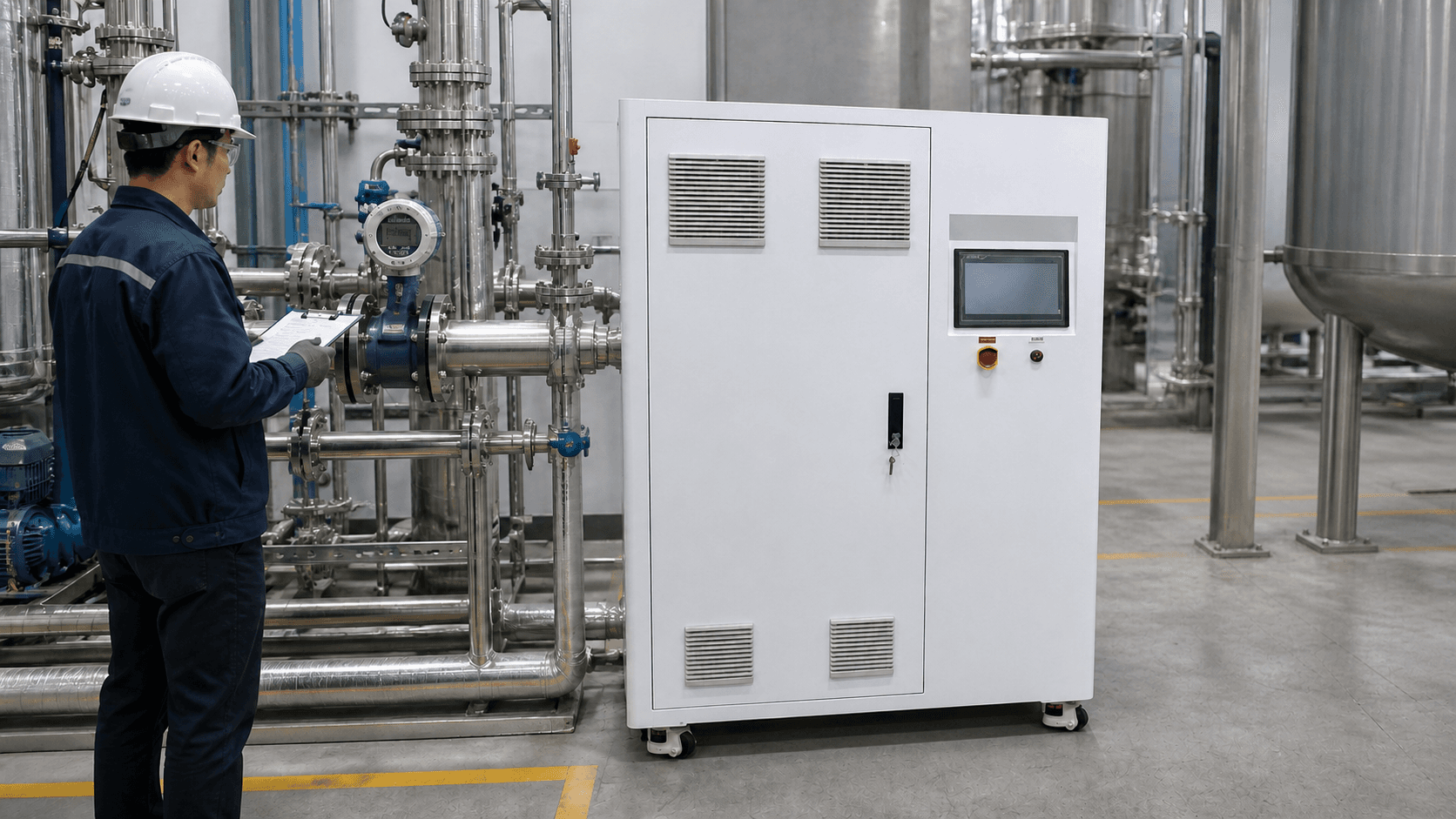
Start with consumption, not equipment size
A hydrogen generator should be sized from the process it serves. That sounds obvious, but many project briefs begin with a cabinet size, a familiar unit, or an assumed hourly number. The better starting point is a demand map: what consumes hydrogen, how much it consumes, when it consumes it, and what happens when several consumers run together.
For an international buyer, the goal is not to prove that one model is universally correct. It is to give the engineering team enough information to compare production capacity, storage, pressure control and interfaces on the same basis. A clear brief also reduces the risk of comparing quoted flow rates that use different reference conditions or different system boundaries.
Record each consumer separately. Include the normal consumption rate, maximum rate, batch duration, number of batches per shift, expected future expansion and whether the equipment can accept an interruption. A chromatograph, heat-treatment line, fuel-cell test bench and laboratory reactor may all use hydrogen, but their demand profiles are very different.
Use the right units and reference conditions
Hydrogen flow is commonly expressed as Nm³/h, NL/min, SLPM, kg/h or sometimes as a mass of hydrogen per batch. They can be converted, but the reference condition matters. Normal and standard litres are not interchangeable unless the stated temperature and pressure convention are known. Ask every supplier to state the basis used in its data sheet.
For planning, use one unit across the project. If your process requirement is expressed in normal litres per minute, convert all downstream calculations to normal cubic metres per hour before comparing generator capacities. Treat the result as a planning figure until the process owner confirms the actual duty cycle and the selected supplier confirms operating conditions.
Mass balance is useful when the demand is tied to a reaction or a known consumption rate. Time-based calculation is more useful when the application opens a valve, purges a line or tests equipment in cycles. Most real projects need both views: a total daily requirement and a time-resolved peak requirement.
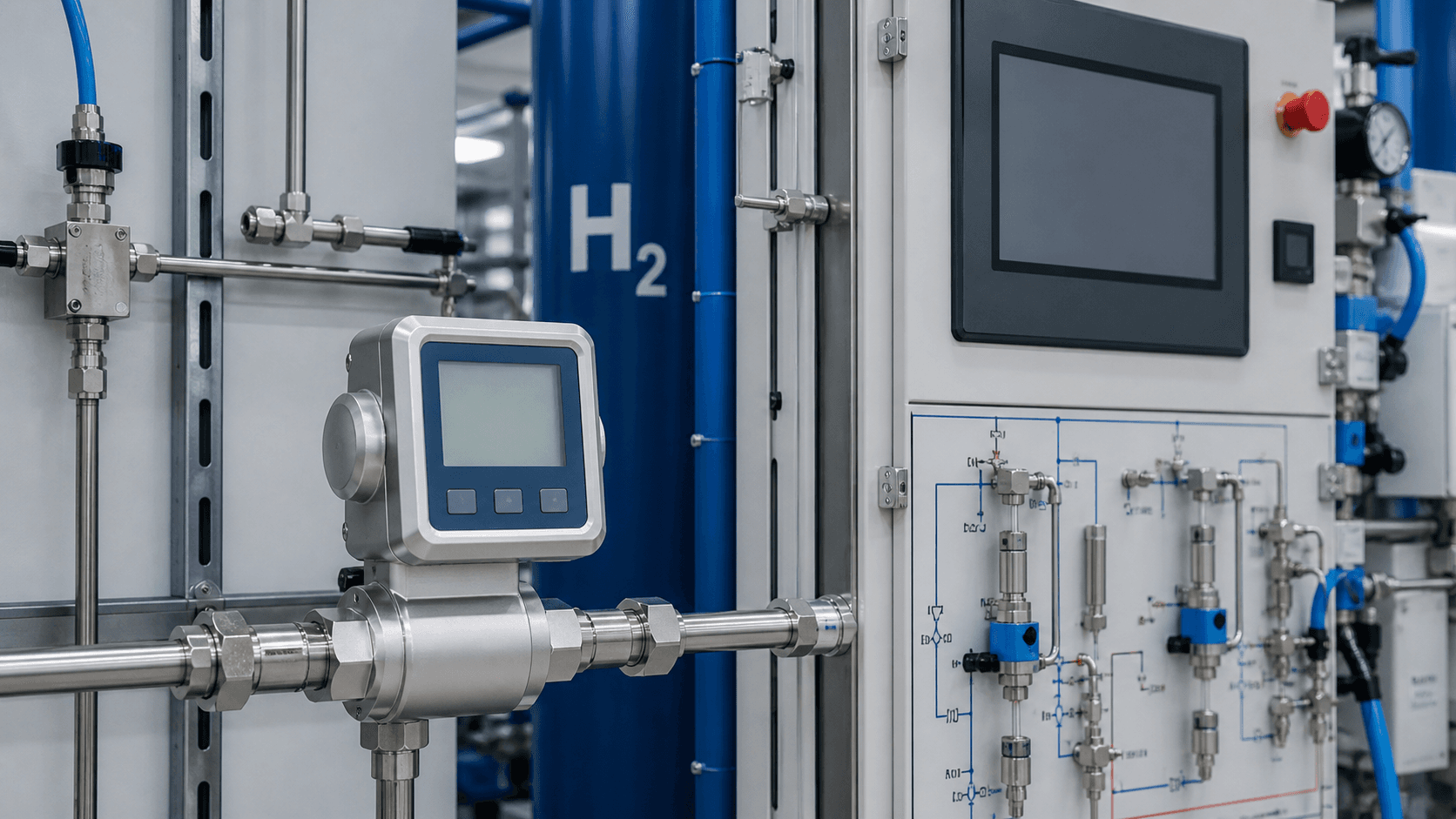
Calculate average demand, peak demand and production window
Average demand is the daily hydrogen requirement divided by the hours the generator is planned to run. Peak demand is the largest simultaneous withdrawal that the downstream process may request. Neither number alone is enough. A system can meet the daily total but fail a short peak; it can also meet the peak but produce unnecessary capacity if a modest buffer can manage the variation.
Build a simple schedule. For every hour, add the demand from all users that may operate simultaneously. Then identify the highest point and the likely duration of that point. This schedule immediately shows whether production can follow demand directly, whether a storage buffer is useful, and whether planned generator operating hours fit the site routine.
Allow a defined engineering margin rather than an unexplained oversized number. Margin should reflect forecast growth, measurement uncertainty, maintenance strategy and process criticality. It should not conceal missing information. A buyer who states the reason for the margin gives a supplier a much better basis for recommending capacity and storage.
Include purity, pressure and storage in the same decision
Flow rate is only one part of usable hydrogen supply. A process may require a particular purity, low moisture content or a stable inlet pressure. These requirements can affect purification, drying, compression, storage and control selection. Write the required delivery condition at the point where your process connects, not only at the generator outlet.
Storage is not simply extra capacity. It can decouple a generator from brief peaks, help maintain delivery pressure, and provide operating resilience. The appropriate size depends on pressure, allowable process interruption, daily profile, local permitting and the overall safety design. It should be reviewed with the final system integrator and site safety team.
Consider the system boundary honestly. Ask whether quoted flow includes all conditioning equipment, whether rated output is continuous, and what utilities are required. An accurate inquiry will state water quality, electrical supply, installation environment, ventilation approach, intended operating hours and destination country alongside the gas requirement.
Need a configuration direction for your application?
Share your required flow, purity, pressure, operating profile and destination. Our team will help identify the questions your specification should answer.
Turn your calculation into an RFQ-ready brief
A concise technical brief is more valuable than a long email. List application, average and peak flow, required purity, delivery pressure, run hours, projected expansion, utilities, installation location, required controls and requested delivery date. Add a process diagram or consumption schedule when available. These documents help a supplier identify questions before a formal quotation is issued.
Use the calculation as a conversation tool. The final design may change after reviewing pressure drop, buffer strategy, process sequencing or site constraints. That is normal. What matters is that every change is traceable to an operating need rather than a guess.
Prepared by Sunny Shen, Hydrogen Solutions Consultant at Vemdra. This guide is an engineering planning resource, not a substitute for a site-specific hazard review, applicable codes, or the instructions supplied with the final equipment.
Frequently asked questions
Should I size a generator only for peak demand?
No. Compare average demand, peak demand and peak duration. Storage and control strategy may cover short peaks more efficiently than sizing continuous production entirely around them.
What information should be included in an inquiry?
At minimum: application, flow profile, purity, pressure, duty cycle, utilities, site location, controls requirement and growth expectation.
Can one system support several users?
Often yes, but simultaneous demand, pressure control, distribution design and isolation strategy should be assessed as a complete system.
How this guide was prepared
Vemdra's editorial team uses application discussions, project-planning experience and publicly available technical references to frame these guides. Technology claims and site requirements should always be checked against current equipment documentation and local standards before a purchase or installation decision.
For background reading, consult the U.S. Department of Energy overview of hydrogen production by electrolysis and applicable local regulations.