

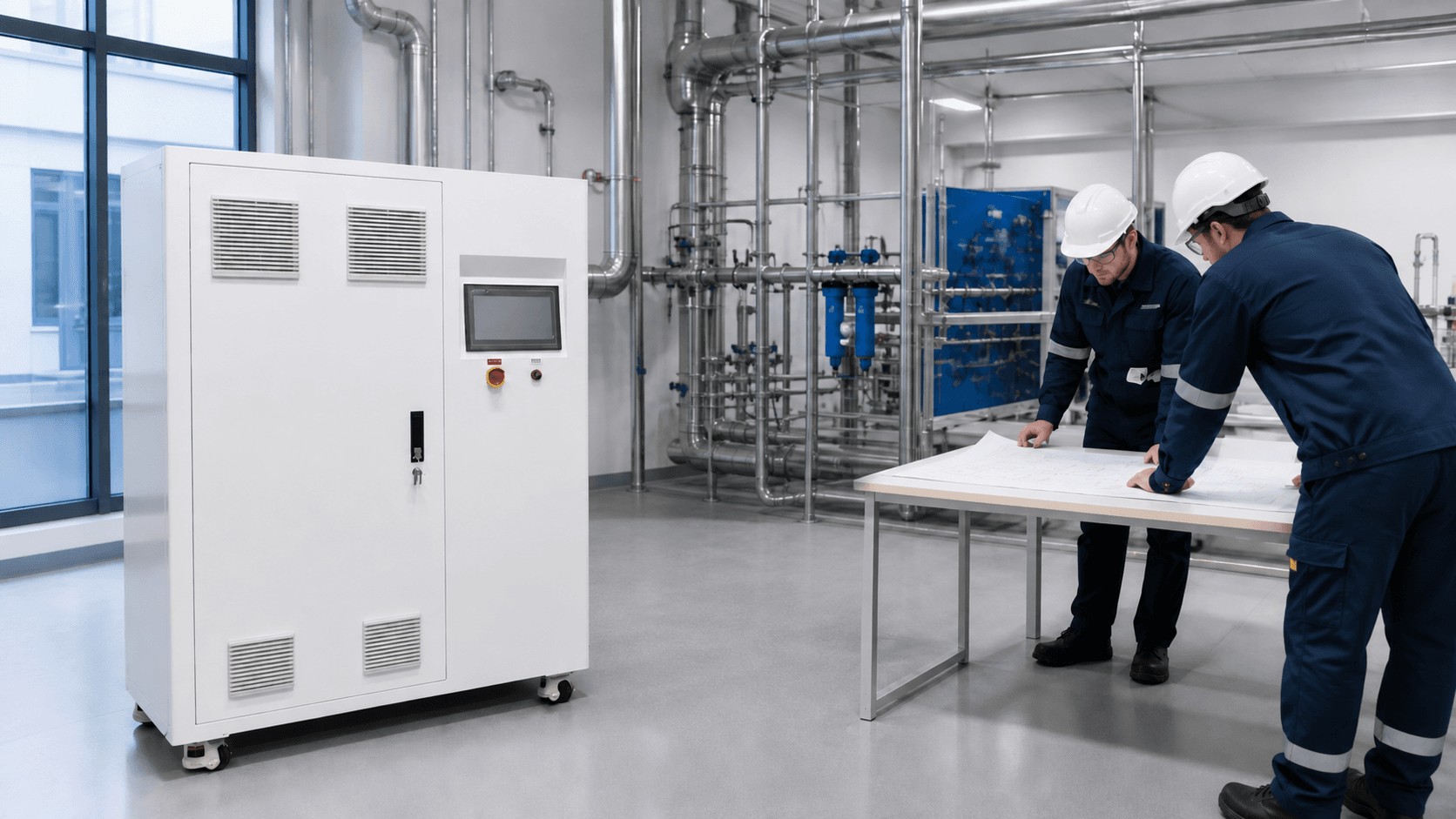
Why a project brief changes the quality of a quotation
An on-site hydrogen project spans more than a generator. It may include water treatment, gas conditioning, storage, compression, distribution, controls, civil preparation, installation and commissioning. A quotation can only be as accurate as the project boundary it is asked to address.
A well-prepared brief gives procurement and engineering a shared reference. Instead of comparing catalogue capacities, they can compare assumptions: delivered gas condition, duty cycle, utilities, interfaces, documentation, service scope and responsibility split. This makes international sourcing more transparent and reduces late-stage scope changes.
The brief does not have to be long. A two-page document with a simple flow diagram, site photographs and a list of unknowns is often enough to begin a productive technical review.
The six inputs every supplier needs
First, define the application and point of use. Explain what hydrogen serves and whether the process has continuous, batch or intermittent demand. Second, define the gas requirement: average and peak flow, purity, pressure, moisture or contamination limits, and allowable interruption.
Third, provide the operating context: hours per day, days per year, expected expansion and whether the project is a demonstration, research platform or production asset. Fourth, describe the site: electrical supply, water availability, drainage, ambient conditions, footprint, access and destination country.
Fifth, map interfaces. Identify downstream equipment, requested control signals, monitoring needs, storage or compression expectations and who owns the distribution pipework. Sixth, state the commercial and delivery context: target schedule, documentation expectations, shipping destination, installation responsibility and acceptance criteria.
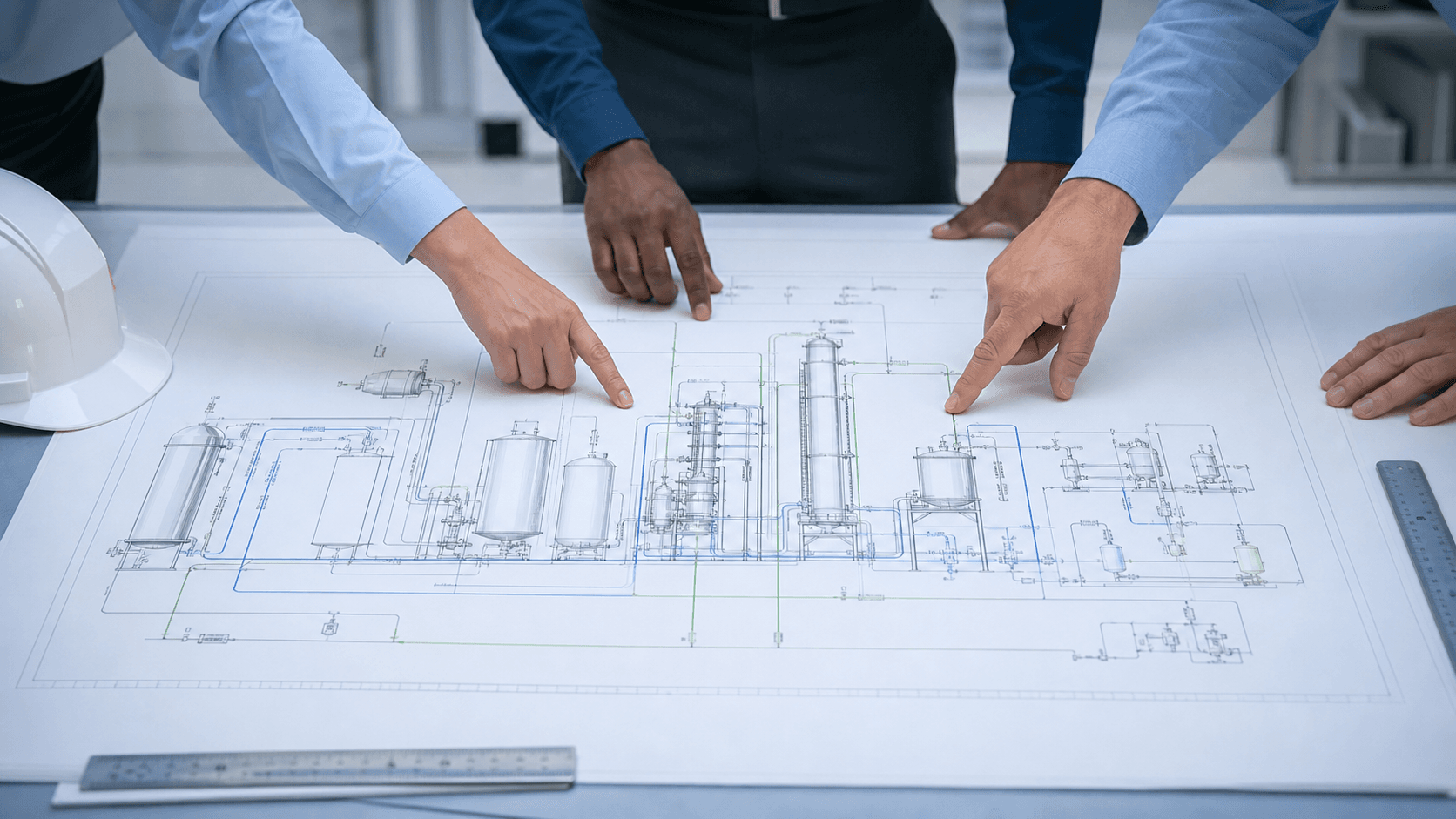
Describe the system boundary without ambiguity
A frequent source of misunderstanding is the word ‘system’. One buyer may mean an electrolyzer cabinet; another may expect a turnkey skid with storage, controls and installation support. Write a simple boundary statement: what is included in the supplier scope, what is supplied by the customer, and what is subject to local engineering.
Use an interface table if the project is complex. For each connection, list the medium, pressure, flow, physical connection, owner and required signal. This is helpful for water, power, hydrogen outlet, venting, drains and control communications. It also gives both parties a checklist during design review.
Be explicit about assumptions. If pressure has not been finalized, state the range. If the site layout is preliminary, provide the current drawing and identify it as preliminary. Good engineering is not pretending uncertainty does not exist; it is making uncertainty visible and assigning it a next step.
Plan for installation, compliance and acceptance
International projects require early alignment on local rules and responsibilities. The equipment supplier can provide product documentation and technical input, but site-specific permits, building requirements, electrical work and safety approval normally require qualified local parties. Confirm the applicable requirements before construction commitments are made.
Define how acceptance will be assessed. This might include factory testing, documentation review, site installation checks, commissioning support, performance verification and operator training. Agreeing these stages early prevents a technical discussion from becoming a commercial dispute later.
Documentation is part of the deliverable. Identify required manuals, drawings, certificates, packing information, spare-parts recommendations, control descriptions and training records. These support handover and make later maintenance more manageable.
Need a configuration direction for your application?
Share your required flow, purity, pressure, operating profile and destination. Our team will help identify the questions your specification should answer.
Use the brief to create a practical next step
Once the inputs are assembled, schedule a technical review rather than asking only for a price. The first review should identify missing inputs, confirm system boundaries and create a shortlist of configurations. A credible recommendation should explain why a capacity, pressure strategy and interface package fit the described operation.
For buyers, the result is a cleaner decision record. For suppliers, it is a chance to solve the actual application. This is the basis of a durable B2B project relationship: fewer assumptions, clearer responsibilities and a configuration that can be reviewed by engineering, procurement and site stakeholders.
Prepared by Sunny Shen, Hydrogen Solutions Consultant at Vemdra. This guide is an engineering planning resource, not a substitute for a site-specific hazard review, applicable codes, or the instructions supplied with the final equipment.

Frequently asked questions
How detailed should an initial project brief be?
Detailed enough to describe demand, gas condition, site, interfaces and responsibility split. Unknown items should be stated as open questions.
Do I need a process diagram?
A simple diagram is strongly helpful. It clarifies where hydrogen is produced, conditioned, stored and consumed.
Who is responsible for local compliance?
This depends on contract scope, but site-specific permits and local installation work normally require qualified parties familiar with the destination jurisdiction.
How this guide was prepared
Vemdra's editorial team uses application discussions, project-planning experience and publicly available technical references to frame these guides. Technology claims and site requirements should always be checked against current equipment documentation and local standards before a purchase or installation decision.
For background reading, consult the U.S. Department of Energy overview of hydrogen production by electrolysis and applicable local regulations.