Model Matched
Product media is assigned to VDTA02.
 Request a Project Review
Test Equipment
Model VDTA02. Product information and technical parameters are matched to the current product information sheet.
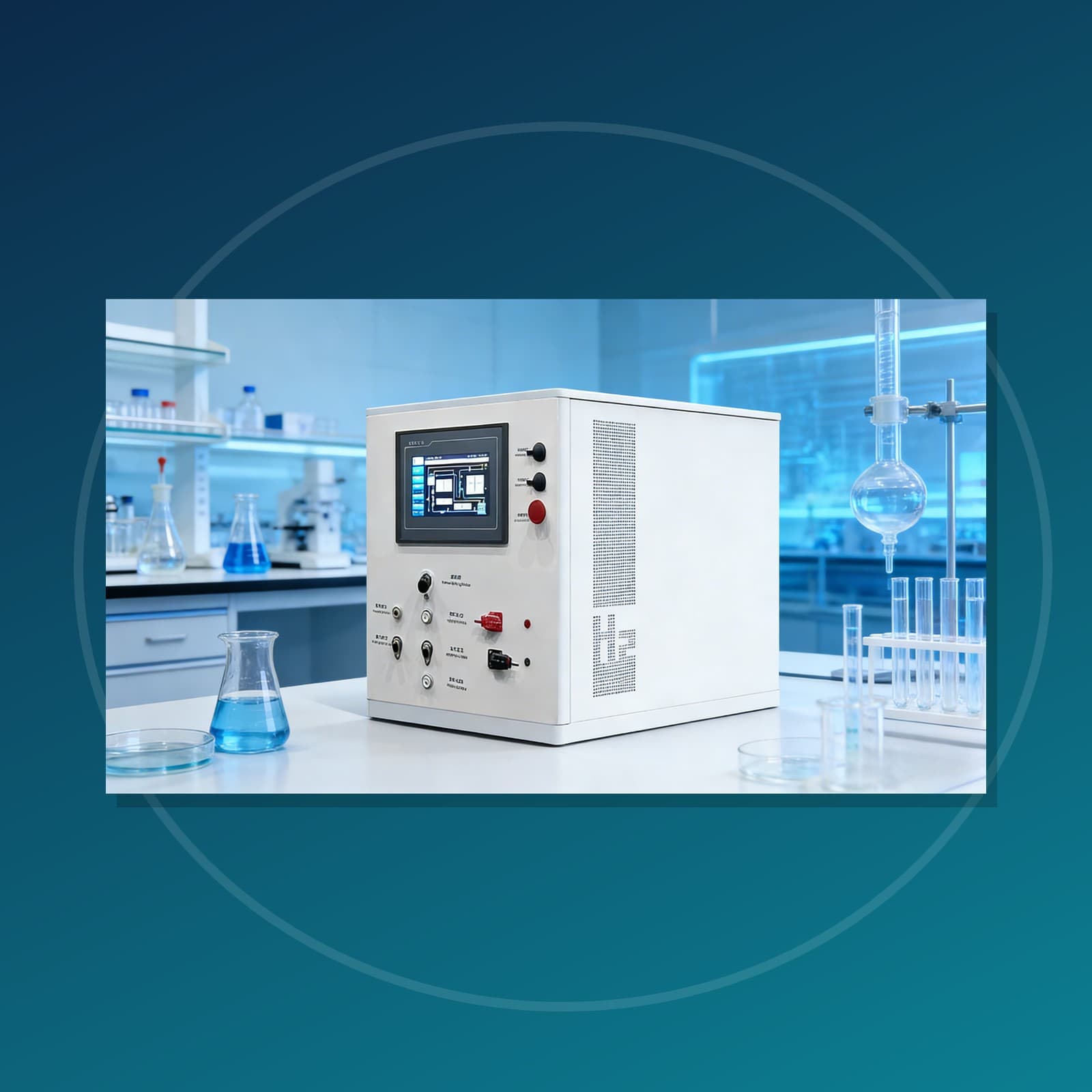
OVERVIEW
Electrolyzer performance evaluation, operating condition simulation, service life prediction, teaching and research, industry-university collaboration
SPECIFICATIONS
Parameters are transcribed from the English product information sheet for VDTA02.
PRODUCT SUPPORT
Product media is assigned to VDTA02.
Technical values are listed from the source sheet.
Listed applications are included below.
Published details are kept within the supplied materials.
Use the inquiry form for a project discussion.
Product catalogue resources are available on request.
APPLICATIONS
Electrolyzer performance evaluation
operating condition simulation
service life prediction
teaching and research
industry-university collaboration
DOWNLOADS
FAQ
A hydrogen laboratory teaching equipment system is a purpose-built learning platform that lets students observe and operate the core stages of the hydrogen value chain in a controlled setting. Depending on the configuration, it can demonstrate water electrolysis, hydrogen storage, fuel-cell power generation, photovoltaic coupling, measurement and safety procedures. Unlike a stand-alone classroom display, hydrogen education equipment connects the underlying theory to measurable operating data and hands-on experiments. When specifying a system, institutions normally consider curriculum level, available utilities, laboratory space, supervision procedures, required experiment modules and the number of student workstations.
A hydrogen training system can support experiments such as PEM water electrolysis, hydrogen and oxygen production-rate measurement, fuel-cell voltage and load-response testing, photovoltaic-to-hydrogen conversion, storage and discharge demonstrations, and energy-efficiency comparisons. The exact experiments depend on the selected model and included modules. For universities and technical colleges, the most useful systems are those that let students record variables, compare operating conditions and relate results to electrochemistry, renewable energy and safety coursework. Before purchase, define the learning outcomes, desired measurement depth, class size, instructor workflow and whether future research or demonstration modules will be required.
Hydrogen educational equipment is suitable for universities, vocational colleges, research laboratories, science museums, secondary schools and professional training centres that teach clean-energy technologies. It is designed to support instructor-led learning, rather than unsupervised consumer use. A suitable configuration depends on the users’ technical background: introductory programmes may prioritise clear visual demonstrations, while engineering departments may need configurable measurement, data acquisition and component-level investigation. Procurement teams should assess instructor training, laboratory ventilation, electrical supply, safety management procedures, available bench space and the expected number of learners before selecting a hydrogen training system.
The contents of a hydrogen training system depend on the selected teaching objective. A typical configuration may combine a PEM electrolyzer or hydrogen source, water management, storage or fuel-cell modules, power supply, sensors, controls, demonstration loads, connecting hardware and operating documentation. Some systems focus on a single process, while integrated platforms illustrate the full renewable-hydrogen pathway. Buyers should request a clear bill of materials, experiment list, utility requirements, safety provisions and training documentation with the quotation. This makes it easier to confirm that the hydrogen education equipment matches the syllabus, laboratory layout and intended assessment activities.
Hydrogen laboratory equipment can be used safely in a supervised classroom or laboratory when it is selected for the environment, installed correctly and operated under documented procedures. A suitable system should incorporate appropriate control, protection and shutdown functions for its design, while the host institution remains responsible for ventilation, electrical safety, staff training, local regulations and risk assessment. The required safeguards vary by model and experiment. During procurement, confirm operating pressure, gas volume, storage method, required clearances, emergency procedures and the qualifications of the people who will operate the equipment. A pre-installation review is advisable for every hydrogen training system.
Yes. Hydrogen teaching equipment can be scoped around a university’s curriculum, research focus and laboratory constraints. Common customization topics include the experiment sequence, PEM electrolysis or fuel-cell modules, photovoltaic integration, measurement points, data interfaces, language of training material, bench layout and safety documentation. The most effective approach is to share the target courses, learner level, number of groups, available utilities, required standards and the desired delivery date early in the project. This allows the technical team to recommend a hydrogen training system that is practical for instruction and leaves room for future teaching or research expansion without adding unnecessary complexity.
PROJECT INQUIRIES
Send your requirements and we will respond with the relevant product information.