Model Matched
Product media is assigned to VDIHE-60N.
 Request a Project Review
PEM Electrolyzers
Model VDIHE-60N. Product information and technical parameters are matched to the current product information sheet.
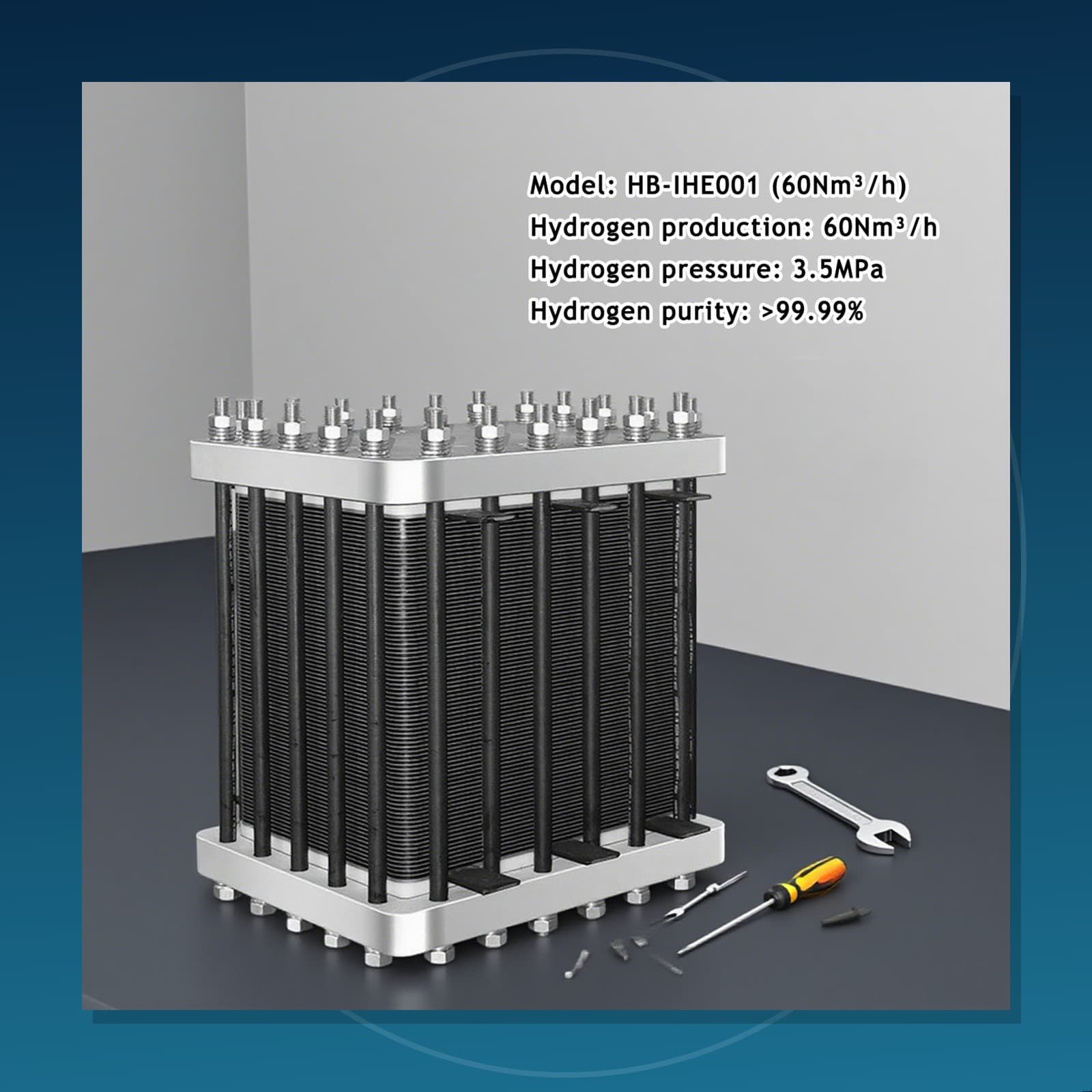
OVERVIEW
On-site hydrogen production for large-scale renewable energy storage, chemical industry, fuel cell systems, hydrogen production and refueling stations, pharmaceuticals, and related sectors
SPECIFICATIONS
Parameters are transcribed from the English product information sheet for VDIHE-60N.
PRODUCT SUPPORT
Product media is assigned to VDIHE-60N.
Technical values are listed from the source sheet.
Listed applications are included below.
Published details are kept within the supplied materials.
Use the inquiry form for a project discussion.
Product catalogue resources are available on request.
APPLICATIONS
On-site hydrogen production for large-scale renewable energy storage
chemical industry
fuel cell systems
hydrogen production and refueling stations
pharmaceuticals
and related sectors
DOWNLOADS
FAQ
A PEM electrolyzer is an electrochemical system that uses a proton exchange membrane to split purified water into hydrogen and oxygen. When supplied with direct current, protons move through the membrane while the gases are separated, allowing the system to produce hydrogen without combustion or fossil feedstock at the point of use. PEM electrolyzers are valued for compact system design, responsive operation and compatibility with variable electrical input. For a purchase decision, buyers should define required hydrogen output, pressure, purity, water quality, electrical supply, operating hours, installation conditions and the balance-of-plant equipment needed to deliver hydrogen to the final application.
PEM electrolyzers are commonly selected where compactness, dynamic response and high-purity renewable hydrogen production are important. The membrane-based process uses purified water rather than a liquid alkaline electrolyte, and PEM systems can be well suited to applications with changing electrical input, including renewable-energy coupling. Alkaline technology can also be appropriate, particularly for certain large and steady-duty projects, so the choice should be based on project requirements rather than a general preference. Buyers should compare capacity, load profile, footprint, gas pressure, water treatment, maintenance philosophy, electrical integration, site conditions and lifetime economics before selecting a water electrolysis technology.
PEM electrolyzer capacity is model-specific and is stated in the technical parameters for each product page. Capacity should be assessed alongside the required hydrogen purity, delivery pressure, electrical input, water quality and annual operating profile; two systems with similar nominal output can be configured differently for different projects. For renewable hydrogen applications, it is also important to consider available generation hours and the variability of the power source. Provide the target production rate, expected utilisation, desired expansion path, downstream storage or compression requirements and installation constraints. This information allows the correct PEM electrolyzer and supporting balance of plant to be selected.
PEM electrolyzers are suitable for renewable hydrogen projects, fuel-cell supply, research and development, laboratory work, hydrogen refuelling preparation, energy storage demonstrations and industrial users that require on-site water electrolysis. The right application depends on production volume, purity, pressure, response time and how the hydrogen will be stored, compressed, transported or consumed. For example, a laboratory installation has different controls and utility needs from an integrated renewable-energy project. Before requesting a quotation, buyers should describe the end use, daily and peak demand, electrical source, site environment, applicable regulations and interfaces with existing equipment so system integration can be evaluated correctly.
PEM water electrolysis requires high-quality deionized water because dissolved ions and contaminants can affect electrochemical performance and the service life of system components. The required water standard is model-specific and is listed in the relevant technical parameters; it should be confirmed during engineering rather than assumed from a generic description. Buyers should review the available water source, treatment equipment, conductivity monitoring, refill or circulation arrangement and maintenance responsibilities. In sites without an existing deionized-water supply, an appropriate water-treatment solution may be part of the project scope. Maintaining the specified feed-water quality is a practical condition for reliable renewable hydrogen production.
Yes. PEM electrolyzer systems can be engineered to work with solar, wind or other renewable electricity sources, provided the power interface, operating profile and balance-of-plant design are matched to the project. Their responsive operation can be useful where power availability varies, but production planning must account for resource intermittency, power conditioning, storage, pressure control and the needs of the hydrogen consumer. Buyers should share renewable generation data, grid connection details, target utilisation, hydrogen demand profile, storage strategy and control requirements. This enables the project team to assess whether a PEM electrolyzer should operate directly with the source, through a DC bus or with supporting energy-management equipment.
PROJECT INQUIRIES
Send your requirements and we will respond with the relevant product information.