
Selecting a hydrogen generator is not simply a question of choosing the largest flow rate. A good specification starts with the process, identifies the real demand profile, and then builds in the safety, integration and service margin your team will need over the system's working life.
For laboratory teams, OEMs and industrial operators, PEM electrolysis is often the most direct route to reliable on-site, high-purity hydrogen. The right unit, however, is the one that supports your operating reality—not an oversized catalogue number.
Start with the operating requirement
Before reviewing a product range, write down what the hydrogen will serve, when it will be consumed and how the system connects to the wider process. A clear project brief shortens selection time and prevents surprises after installation.
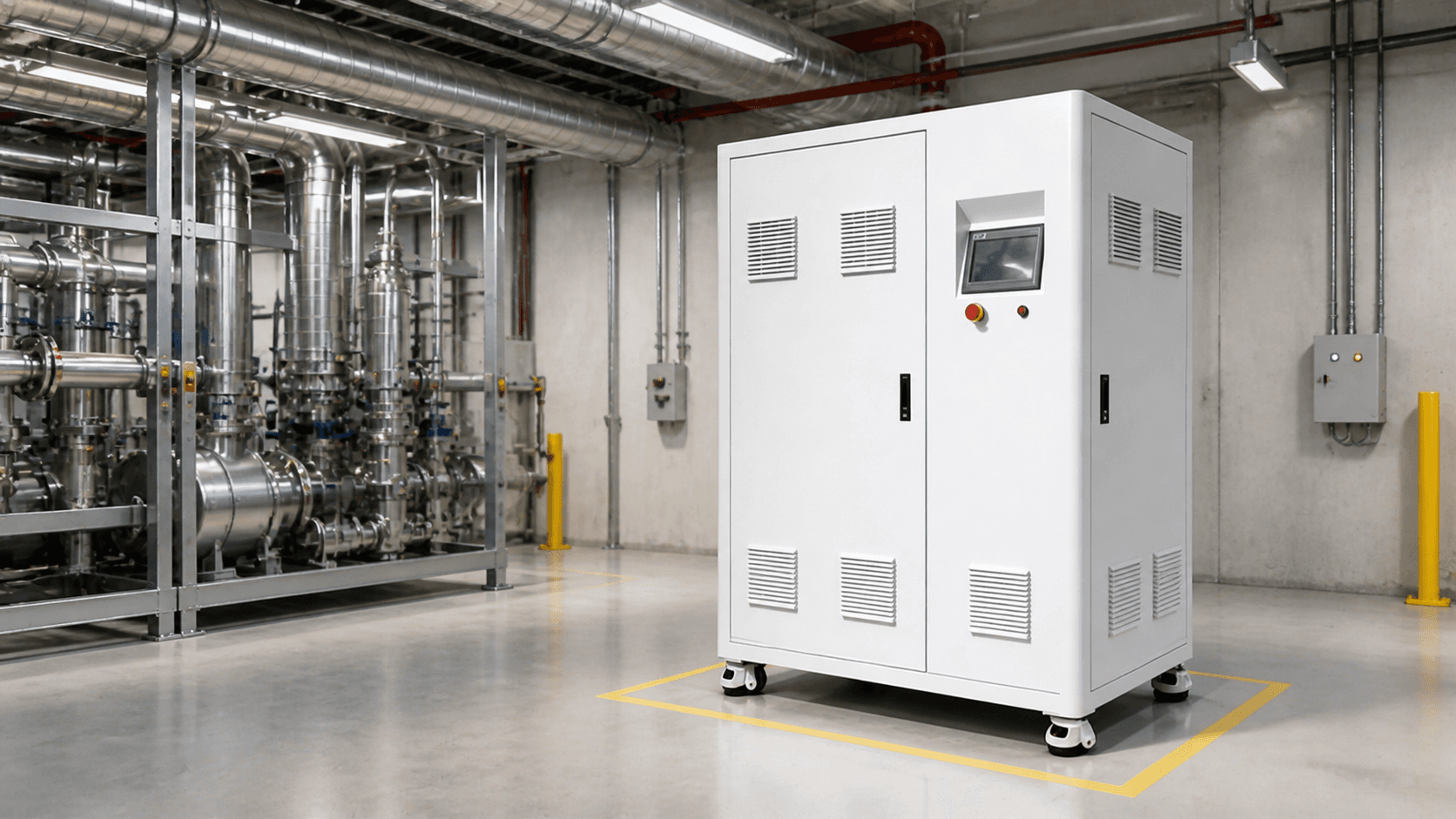
PEM technology: what it changes
PEM systems produce hydrogen on demand, with fast dynamic response and compact system architecture. That makes them well suited to applications where storage needs to be reduced, demand changes over time, or high purity is required at the point of use.
Engineering noteDo not size only for peak flow. Review the full operating cycle, including start-stop frequency and the downstream buffer or storage arrangement.
The five specifications to compare
Supplier brochures can make systems look similar. These are the factors that determine whether a unit will integrate smoothly into your operation.
Plan the system around the application
A hydrogen generator is part of a system, not an isolated cabinet. The final configuration may include drying, storage, compression, monitoring and a connection strategy to your process equipment. Discussing these boundaries early creates a more reliable delivery plan.
Share the specification that matters.
Flow, purity, pressure, duty cycle, destination and interface requirements give engineers the information needed to recommend a practical configuration.
Turn a specification into a project brief
The fastest route to an accurate recommendation is a short technical conversation. We can review the application, identify the system boundary and prepare a configuration direction that your engineering or procurement team can assess.