

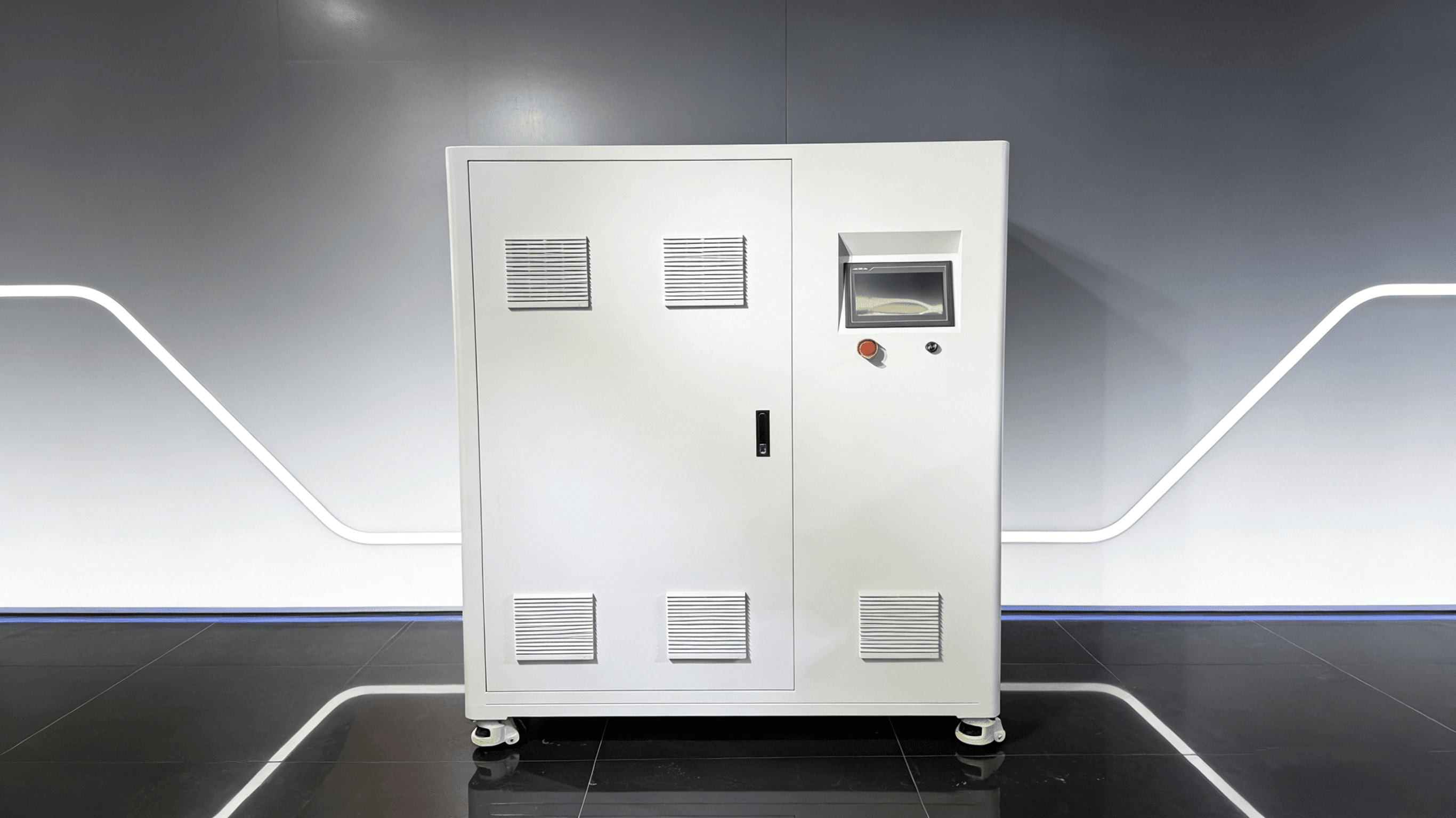
Reference data to place on the FAT acceptance sheet — verify the ordered configuration before testing.
| Item | Reference for the 0.6 Nm³/h PEM range |
|---|---|
| Hydrogen production rate | 0.6 Nm³/h |
| Hydrogen purity options | 99.5–99.9%, 99.999%, 99.99999% or 99.9999999%, by configuration |
| Dew point | −70 °C |
| Operating temperature | 5–65 °C |
| Feedwater requirement | ASTM D1193 Type I deionized water, greater than 10 MΩ·cm |
| Power supply | 110–380 V optional; confirm the ordered electrical configuration |
| MOQ and lead time | 1 unit; standard product record states 45–60 days, while custom equipment is longer |
What should a hydrogen generator FAT prove before shipment?
A hydrogen generator factory acceptance test should prove that the exact ordered system can meet the acceptance criteria agreed by buyer and supplier. For an EPC contractor, industrial manufacturer or research buyer, that means more than seeing a screen light up. The test should connect the purchase order, approved data sheet, drawings, inspection plan and measured results in one place. If those items do not match, the test is only a demonstration, not an acceptance event.
Start with the system identity. Record the project name, model, serial number, document revision, intended country, main subassemblies and any approved deviations. Then compare each visible item with the controlled bill of materials and layout. A swapped purifier, a different pressure device or an unapproved control panel can matter later, even if the generator produces hydrogen on the day. This is the point where a buyer can still ask a clear question without creating a site delay.
The test also needs a defined boundary. Does the scope stop at the generator outlet, or does it include water treatment, drying, purification, storage, a compressor, controls, vent connections and remote signals? Put the answer in the FAT plan. Otherwise, a supplier may test one boundary while the buyer expects another. That small gap is a familiar source of expensive conversations after arrival.
For Vemdra's industrial PEM hydrogen generator range, the useful starting facts are concrete. The 0.6 Nm³/h product-data entry lists a 0.6 Nm³/h hydrogen production rate, a −70 °C dew point, 5–65 °C operating temperature and ASTM D1193 Type I deionized-water input above 10 MΩ·cm. These are reference points for the acceptance sheet, not a substitute for the final ordered configuration. The signed technical schedule always wins.
Which parameters must be measured and recorded at the FAT?
The FAT should measure the parameters that decide whether the hydrogen supply will work at the buyer's point of use: flow, purity, pressure, dew point where specified, electrical input, water quality requirement, temperature, alarms and operating stability. Each reading needs its unit, instrument identity, calibration status, test condition, time and acceptance limit. A number without its condition is a loose thread. It looks useful, but it cannot be compared fairly.
Flow is especially easy to misread. Confirm whether the agreed capacity is expressed in Nm³/h, standard litres per minute or another reference basis. Record the reference condition used by the measurement. Then state whether the output was continuous, how long the run lasted and whether the system was at a steady point when the reading was taken. A brief peak may be fine for a demonstration, yet it does not prove a process duty cycle.
Purity needs the same discipline. The Vemdra 0.6 Nm³/h range is listed with several purity configurations, from 99.5–99.9% through higher specified grades. The FAT sheet should name the ordered grade and the test method, rather than copying a high number from a catalogue. If moisture or oxygen limits matter to the downstream process, list the method, sampling point and allowed limit. A supplier cannot confirm a condition that the buyer has not defined.
Pressure is not just a gauge value. Note the control setpoint, permitted tolerance, outlet connection, downstream restriction used during the test and the response to a controlled demand change. If the project includes storage or compression, test the full agreed operating sequence. The process may care less about a high static pressure than about a calm, repeatable delivery pressure. That difference is worth catching before a crate is closed.
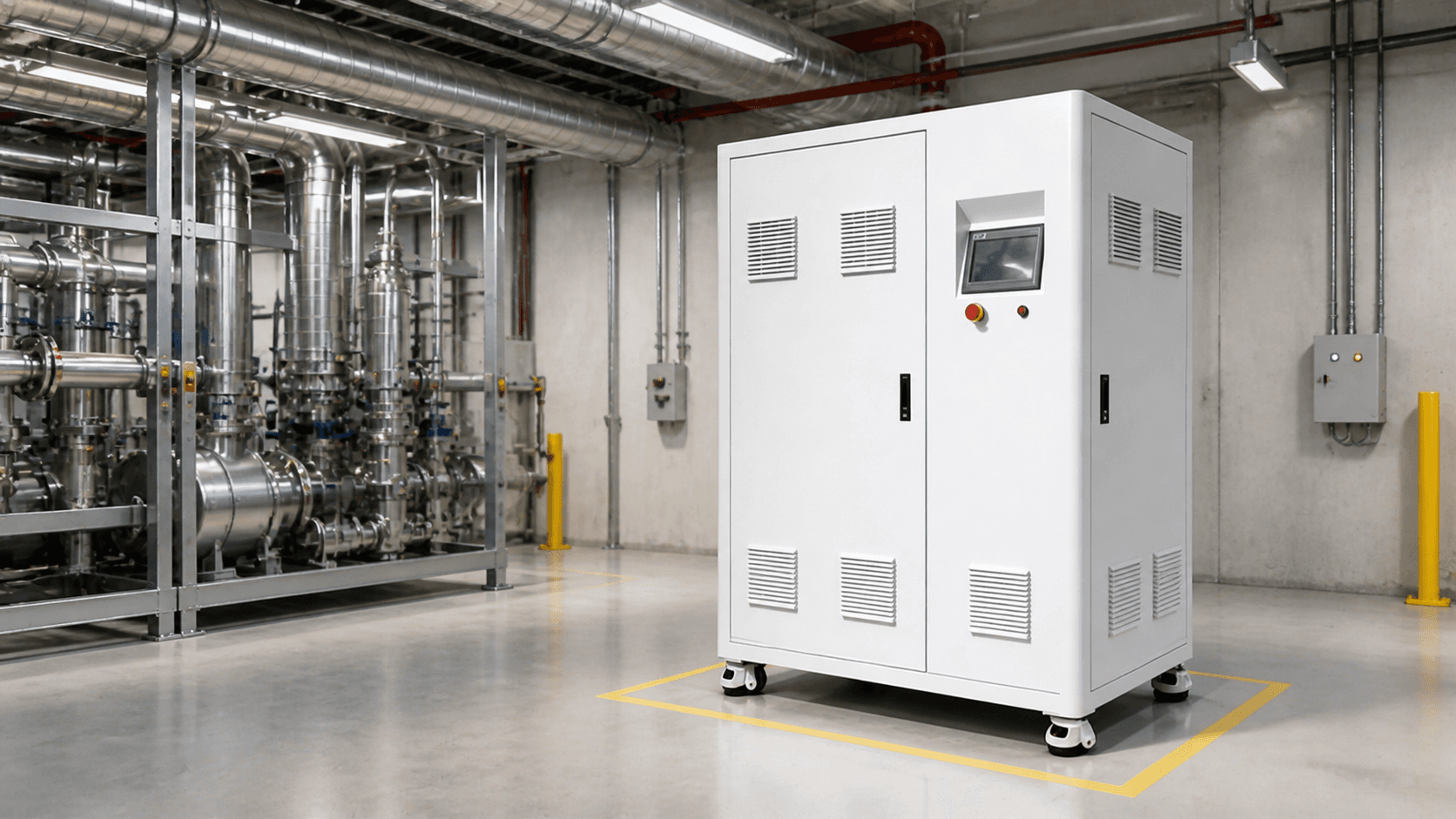
How can a buyer judge whether the supplier's FAT is reliable?
A reliable FAT is prepared before the visitor arrives. The supplier shares an agenda, acceptance sheet, instrument list, drawing revision, witness points and safety rules early enough for the buyer to comment. The buyer does not need to control the factory. The buyer needs a clear trail from requirement to result. That trail makes the later inspection calmer for everyone.
Ask who performs each task and who signs it. A production operator may run the system, while a quality representative verifies the record and a project engineer answers technical questions. Independence matters. If one person builds, tests, approves and explains every result, there is less useful checking. A simple sign-off table is often enough: supplier test engineer, quality representative, buyer witness and third-party inspector when the contract calls for one.
Look for repeatability, not theatre. A good session can include startup, warm operating condition, a stable production period, normal shutdown and selected alarm responses. It should also show that gauges, analysers and electrical instruments are identified and within calibration. When an item cannot be tested at the factory because of the agreed project boundary, record that fact, the reason and the site test that will close it. Honest limits build more trust than a vague tick mark.
Vemdra's established export markets listed in the company brief include Germany, the Netherlands, France, the United States, the United Kingdom, Spain and Italy. For any of those destinations, the buyer should still identify the country-specific installation rules and the party responsible for local approval. Factory evidence supports a project; it does not replace the final site hazard review, electrical work or local authority process.
Which certificates, test reports and factory-audit records should be checked?
Ask for evidence by category, then check whether it applies to the supplied configuration. The first category is product and component documentation: approved drawings, data sheets, wiring diagrams, manuals, material records where required, calibration certificates and the FAT report itself. The second is project evidence: packing list, serial-number traceability, photos of the tested unit, open-item list and release note. These documents turn a shipment into something the buyer can verify later.
Certification claims deserve a careful question: which certificate, report or declaration applies to this exact model, destination and scope? A certification for a component is not automatically certification for the full installed system. A document for one voltage or enclosure may not cover another. Vemdra's current product data available for this article does not name a model-specific certificate file for the 0.6 Nm³/h range, so this article does not claim one. The buyer should request the applicable documents before payment or shipment approval.
A factory-audit pack should show how the supplier controls the build, not merely present a tidy meeting room. Review the incoming inspection approach, serial-number tracking, assembly checkpoints, pressure-test records where applicable, non-conformance handling, calibration management, final inspection and packing process. The practical question is: if a discrepancy appears, can the supplier identify the affected unit and correct it in a controlled way? That is a much better test than a glossy brochure.
Keep the document list short enough to use. Give every required item an owner, revision, due date and acceptance status. If a document is pending, say so in the FAT record and agree whether it is a shipment hold point or a post-FAT action. For safety-critical or regulatory evidence, do not accept a verbal promise. A clear written close-out condition protects both buyer and supplier.
Need a configuration direction for your application?
Share your required flow, purity, pressure, operating profile and destination. Our team will help identify the questions your specification should answer.
What shipment, installation and commissioning risks can the FAT prevent?
The first preventable risk is a mismatch between a factory test and the real site. A generator can appear healthy on a factory utility supply and still face a different voltage, water arrangement, ambient temperature, ventilation approach or control interface at the destination. Put those site facts on the FAT cover sheet. The Vemdra 0.6 Nm³/h reference range lists optional 110–380 V supply, which is exactly why the ordered electrical version should be written down and verified rather than assumed.
The second risk is an incomplete boundary. Some projects need only a hydrogen generator; others also need purification, pressure regulation, storage, distribution or host-machine signals. Without a boundary checklist, important pieces can fall between supplier, installer and buyer. Test every agreed connection at least to the level possible in the factory, label customer-supplied items clearly and create a site commissioning list for the rest.
The third risk is weak packing and handover. Before release, photograph the tested unit, serial plate, accessories, cables, spare parts, documents and packing condition. Match each photo to the packing list. Vemdra's product record states MOQ of one unit and a standard lead-time range of 45–60 days for standard equipment, while customised equipment takes longer. Those commercial facts should be confirmed in the order, together with the requested delivery date, shipping terms and final document package.
The fourth risk is treating commissioning as a formality. Site commissioning should repeat the checks that depend on the installation: utilities, connections, ventilation, leak checks, interlocks, process delivery condition, emergency response and operator training. The FAT makes that stage easier because the baseline is known. It does not make the site work disappear. Think of it as the bridge between a controlled factory and an operating plant.
What should be included in the final FAT release decision?
A release decision should be explicit: accepted, accepted with defined open actions, or not accepted. Avoid vague language such as ‘generally okay’. For every requirement, record pass, fail, not tested or not applicable. Link any exception to a corrective action with an owner and deadline. If an item affects safety, contractual performance or destination compliance, state whether it blocks shipment. A buyer should never need to guess what a signature means.
The final pack should include the signed acceptance sheet, measured results, calibration evidence for agreed instruments, as-built drawing list, photographs, serial numbers, packing list, manuals, spare-parts list, warranty terms and the site commissioning checklist. The Vemdra product data for the referenced industrial range states a one-year warranty; confirm the exact warranty start point, exclusions and service response path in the sales contract rather than relying on an informal message.
For a first order, add a short lessons-learned note. Was the information package easy to follow? Did the test expose an interface question? Were the measurements captured at the agreed boundary? The answer helps when a buyer orders another unit or specifies a larger project. Procurement improves when each shipment leaves a cleaner trail than the last one.
If you are preparing a hydrogen generator RFQ, send the intended application, average and peak flow, ordered purity, pressure, utilities, site country, control interfaces, FAT witness requirement, documentation list and delivery target. Vemdra can use that brief to frame a project review around the real equipment boundary. It is straightforward, but it saves a surprising amount of back-and-forth.
Prepared by Sunny Shen, Hydrogen Solutions Consultant at Vemdra. This guide is an engineering planning resource, not a substitute for a site-specific hazard review, applicable codes, or the instructions supplied with the final equipment.
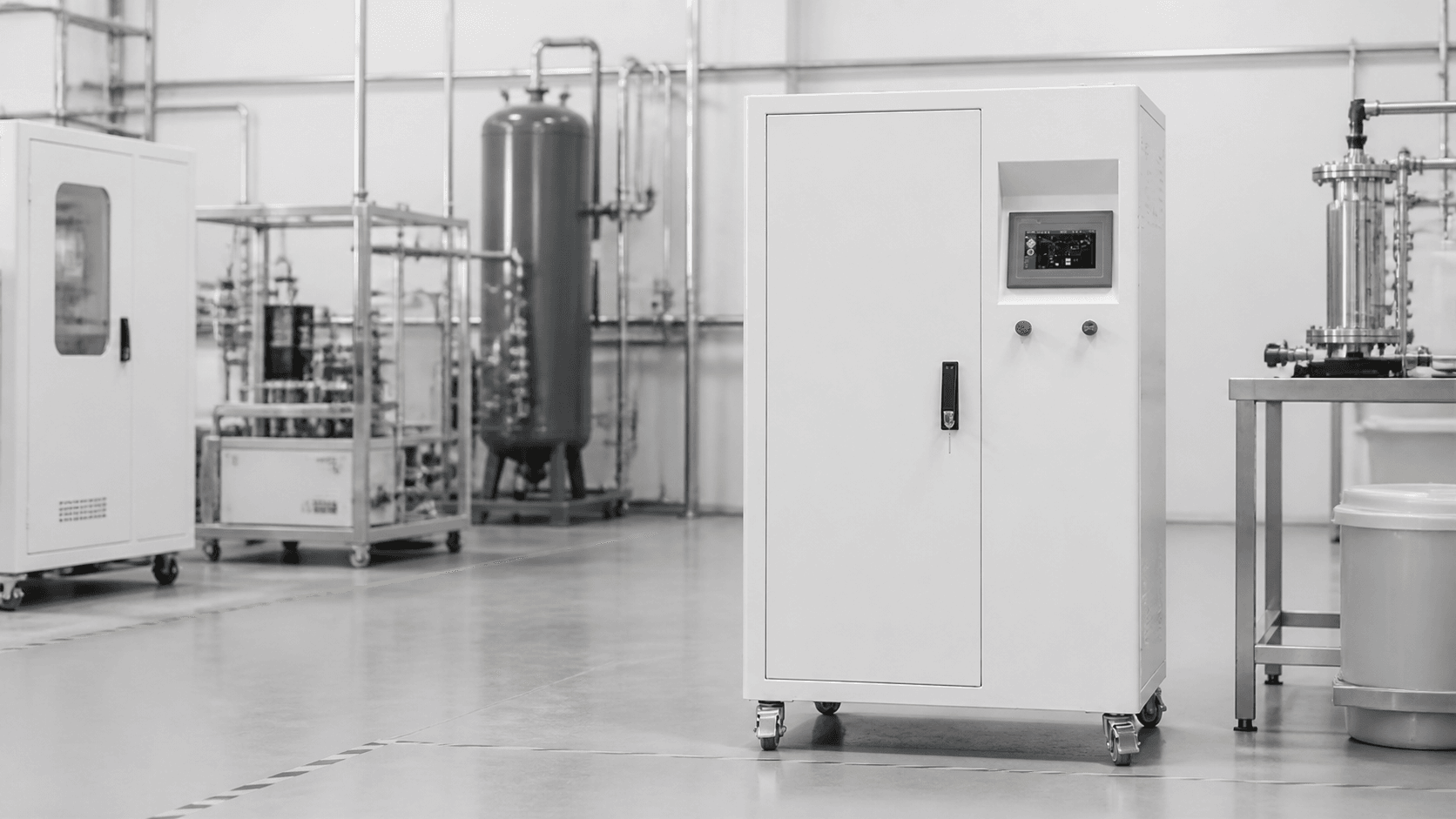
Frequently asked questions
What is included in a PEM hydrogen generator factory acceptance test?
A useful FAT checks the agreed model and configuration, operating output, gas condition, pressure, utilities, safety functions, instruments, documents, serial numbers and release actions. The signed order specification defines the exact scope.
Can a buyer witness a hydrogen generator FAT remotely?
Yes, if the contract allows it. Ask for a timed agenda, live views of serial numbers and instruments, recorded readings, document sharing, photographs and a signed test sheet. Decide which items require an on-site witness before production begins.
What hydrogen purity should be written on the FAT sheet?
Write the purity grade ordered for the project, the sampling point, test method, acceptance limit and test condition. Do not use a catalogue maximum when the order calls for a different configuration.
What is the MOQ and lead time for an industrial PEM hydrogen generator?
The Vemdra product record for the referenced range states an MOQ of one unit and a 45–60 day lead-time range for standard equipment. Custom configurations require a confirmed schedule in the quotation and purchase order.
Which after-sales documents should be collected before shipment?
Collect the FAT report, manuals, drawings, parts list, warranty terms, packing list, serial-number record, calibration evidence where agreed and the site commissioning checklist. Ask the supplier to identify the after-sales contact and response process in writing.
How this guide was prepared
Vemdra's editorial team uses application discussions, project-planning experience and publicly available technical references to frame these guides. Technology claims and site requirements should always be checked against current equipment documentation and local standards before a purchase or installation decision.
For background reading, consult the U.S. Department of Energy overview of hydrogen production by electrolysis and applicable local regulations.