

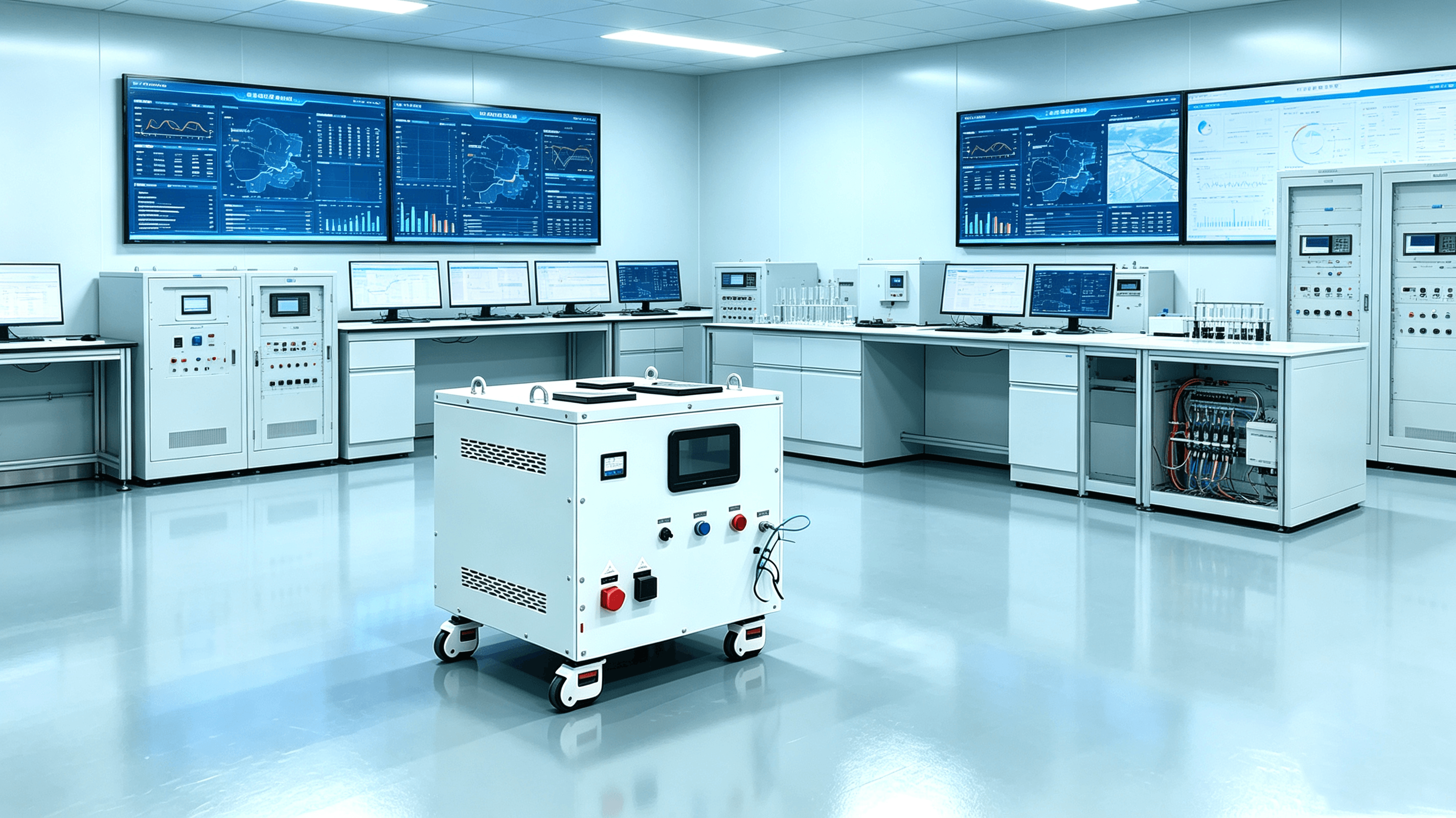
Reference checks for a fuel-cell teaching or research RFQ — confirm the final configuration in the signed data sheet and quotation.
| What to compare | Why the buyer should ask |
|---|---|
| Learning or test objective | Defines whether the platform must demonstrate power generation only, or also hydrogen storage, gas flow, load response and measured efficiency. |
| Electrical load and measurement range | Shows whether the included instruments and loads can support the planned lesson or research exercise. |
| Hydrogen quality and pressure at the stack | Protects the fuel-cell operating boundary; confirm the required gas condition, control method and connections. |
| Hydrogen storage and discharge boundary | Clarifies what is supplied, what is handled by the laboratory and which safe-state instructions apply. |
| Safety functions and documentation | Lets the institution review alarms, shutdown logic, manuals, training material and the evidence needed for its own laboratory approval. |
| Service and spare-parts path | Turns a classroom demonstration into equipment that can be kept ready for future cohorts and repeat experiments. |
For a university or research buyer, when is a fuel cell better than a battery?
Choose a hydrogen fuel-cell platform when the real learning or research question is how hydrogen becomes electricity. A battery stores electricity inside the device. A fuel cell converts the chemical energy of supplied hydrogen and oxygen into electrical power while it is operating. That difference changes the lesson. Students can investigate the energy path, reactant supply, pressure, load response and water formation instead of only watching a stored charge fall over time.
Choose a battery when the main task is simpler: charging, discharging, cycle behaviour, state of charge or basic power delivery. Batteries are compact and familiar. They are often the right starting point for a short electronics lab or a demonstration where hydrogen handling would add more work than value. There is no prize for adding a fuel cell to a lesson that does not need one.
The key is to name the decision before asking for equipment. Is the institution teaching the hydrogen value chain? Is it testing how a fuel cell responds to a changing electrical load? Is it comparing energy carriers for a microgrid or transport concept? Or is it mainly teaching stored electrical energy? Once that answer is clear, the rest of the procurement brief becomes much less foggy.
Vemdra lists the VDHT001 as a Hydrogen Fuel Cell Power Generation Demonstration System for new-energy teaching and training, scientific research experiments and hydrogen-energy science exhibitions. Its stated audiences include universities, vocational colleges, research institutions and science museums. That makes it relevant where the buyer needs a visible hydrogen-to-power experiment, not a substitute for every battery exercise in the curriculum.
What does each technology actually teach or prove?
A battery lesson usually starts with stored electrical energy. The instructor can set a load, watch voltage and current change, compare charging conditions and discuss loss, heat and cycle behaviour. It is direct, tidy and useful. For many first-year modules, that is enough. The physical story begins and ends with the cell pack and its electrical connections.
A hydrogen fuel-cell lesson has a wider system boundary. It can begin with hydrogen storage or a hydrogen source, move through pressure and flow control, then reach the fuel-cell stack and electrical load. The students see that electric output depends on more than wires. Gas condition, reactant supply, operating point and the load all matter. That is the point: a fuel cell teaches a system, not just an electrochemical component.
This wider view is valuable for engineering programmes because real energy projects rarely arrive as one isolated device. They include interfaces, operating procedures and a balance of plant. A fuel-cell platform gives a lecturer a practical way to ask: what happens when demand changes, when hydrogen is unavailable, or when the stack is asked to operate outside the agreed condition? Those questions bring controls and safety into the room without turning the class into a giant plant project.
There is also a healthy counterpoint. A fuel-cell platform is not automatically more educational. If the instruments are hidden, the experiment is scripted with no choices, or the class has no time to discuss the result, the extra hardware can become scenery. The best platform is the one whose data, operating sequence and experiment steps match the course outcome. That is a more useful test than a glossy product photo.
Where does hydrogen have a real advantage over a battery?
Hydrogen has an advantage when the project must separate energy storage from power generation. With a battery, the storage medium and the power-producing device are joined in one unit. With a fuel-cell system, stored hydrogen can be considered separately from the stack that produces electrical power. That distinction is useful for lessons about energy carriers, storage duration, refuelling concepts and system architecture.
Hydrogen is also a strong fit when the buyer wants a visible power-to-gas-to-power narrative. A class can connect renewable electricity, electrolysis, hydrogen storage and fuel-cell generation as linked stages. The point is not to claim that this path is best in every situation. It is to give students and researchers a concrete way to compare trade-offs: conversion steps, interfaces, operational discipline and the difference between energy and power.
For research teams, the advantage can be measurement. A controlled fuel-cell platform can support work on load response, voltage-current behaviour, reactant delivery or the relationship between operating conditions and electrical output. The exact experiment depends on the selected configuration, instruments and supervision plan. A buyer should request an experiment list rather than assume that every fuel-cell unit supports every study.
For a public science exhibition, hydrogen can make the energy story easier to see. Visitors can follow a physical pathway from fuel to electricity and ask sensible questions about storage, water and load. A battery display can be excellent too, but it may not show the same chain of conversion. Different tools; different stories. That is the honest comparison.
Which parameters should appear in a fuel-cell purchase specification?
Start with the electrical side. State the planned load, desired voltage and current observation range, data-recording need, operating duration and whether the class must see changing load conditions. A rated-power number by itself cannot answer these questions. A platform can be technically sound yet unsuitable if its load or display does not let students observe the behaviour the syllabus asks them to explain.
Then describe the hydrogen boundary. The Vemdra VDHT001 product record lists a hydrogen-pressure range of 0.035–0.05 MPa at the fuel-cell specification, hydrogen purity of at least 99.99% with carbon monoxide limited to 1 ppm, and theoretical hydrogen consumption at rated power of 1.43 L/min. Treat these as product-record reference values for an inquiry, not as permission to skip the final equipment data sheet or the institution's safety review.
Storage needs its own line in the brief. The same product record lists a solid-state hydrogen storage tank with more than 22 g storage capacity, a stated filling-pressure range of 0.6–1.0 MPa and a discharge-rate reference above 4 L/min. The buyer should confirm what is delivered, which filling method is used, what the laboratory supplies, how storage is handled and which local procedures apply. A tank is not a footnote; it is part of the teaching and safety boundary.
Finally, specify the physical and operational setting. The VDHT001 record lists demonstration-system dimensions of 1200 × 700 × 276 mm excluding the bracket and a listed weight of 15 kg excluding it. Verify room access, bench layout, supervision, ventilation approach, available utilities and the number of student groups before committing. It sounds mundane, but a platform that does not fit the laboratory workflow rarely gets used as often as planned.
Need a configuration direction for your application?
Share your required flow, purity, pressure, operating profile and destination. Our team will help identify the questions your specification should answer.
How do you judge whether a fuel-cell supplier is credible?
A credible supplier can explain the system boundary in plain language. Ask what is included in the fuel-cell platform, what remains with the institution, which experiments are supported, what gas condition is required at the stack and how normal startup, shutdown and fault conditions are handled. If the answers remain vague, the quotation will remain vague too. That is not a small risk when equipment will be used repeatedly by new cohorts.
Request a document list before placing the order. It should identify the product data sheet, manuals, wiring or process diagrams where relevant, packing list, serial-number record, maintenance guidance, recommended spare parts, inspection record and training material. If the institution needs specific certificates, declarations or test reports for its procurement or safety process, identify the exact document and the applicable configuration. Do not treat a general claim as proof for every destination or every version.
Ask how the platform is tested before shipment. A practical factory check can confirm the agreed configuration, visible functions, operating sequence, measurement points and document pack. Where a buyer needs a witness test, define the scope early: what will be observed, which readings are recorded and what would delay release. A clear factory acceptance plan is as useful for a teaching platform as it is for larger hydrogen equipment.
Vemdra's company information identifies it as a hydrogen-generator system-solution provider, with fuel-cell power-generation systems among its listed product lines. For a project review, the more important next question is still specific: can the proposed VDHT001 configuration support the stated course, laboratory conditions and documentation needs? Good supplier evaluation always returns to the actual application.
What procurement risks should a lab avoid?
The first common mistake is buying for the headline category. A ‘hydrogen fuel-cell trainer’ can mean a small display, a structured laboratory platform or a research-oriented configuration. Before you compare price, compare the experiment list, visible components, measurements, data access, student tasks and supervision requirements. Otherwise, two quotations can look similar on paper while supporting very different teaching outcomes.
The second risk is ignoring the hydrogen boundary. A buyer may focus on electrical output and forget to ask about purity, pressure, storage, connectors, refuelling arrangements and shutdown instructions. Those details affect setup, risk assessment and daily operation. Put them on the RFQ checklist, even if some answers are marked ‘to be confirmed’. Open questions are far safer than silent assumptions.
The third risk is treating compliance as a supplier checkbox. The supplier can provide product documents and technical information, yet the university or laboratory still needs qualified local review of installation, operating procedures and any applicable requirements. The final responsibility split should be written down. This is especially important for export projects, where the destination country and the host institution may have their own process.
The fourth risk is forgetting continuity. A teaching platform succeeds over several academic years only if staff can start it safely, find the correct manual, obtain agreed consumables or spares and hand it to the next instructor. Ask about training, service contact, recommended routine checks and the expected documentation package. It is not glamorous, but it is what keeps a good platform from becoming a locked cabinet after one semester.
What should a useful fuel-cell RFQ include?
A useful RFQ starts with one sentence: what must the students or researchers be able to observe, measure or prove? Add the learner level, planned experiments, number of groups, available laboratory space, requested data points and target delivery date. This tells the supplier whether the task is an introductory demonstration, a repeatable teaching laboratory or a research-support platform.
Next, list the operating boundary: expected electrical load, hydrogen condition, storage approach, available utilities, desired control or data interface, installation country and any local documentation requirement. Attach a room photo or simple layout if space is tight. It saves the usual email chain of ‘will it fit?’ and turns a general inquiry into a technical conversation.
Then state the commercial checkpoints. Confirm whether a sample or demonstration is needed, whether remote or on-site training is expected, which payment and shipping terms must be quoted, and whether the institution requires a factory test record before shipment. For education buyers, a complete document pack often matters almost as much as delivery itself because several stakeholders must approve the purchase.
Vemdra can review an application brief around the required lesson or test, not merely a product name. Share the target course, hydrogen boundary, planned measurements, facility constraints and destination. That gives the technical team a sensible place to start — and gives the buyer a clearer way to compare the response.
Prepared by Sunny Shen, Hydrogen Solutions Consultant at Vemdra. This guide is an engineering planning resource, not a substitute for a site-specific hazard review, applicable codes, or the instructions supplied with the final equipment.
Frequently asked questions
Is a hydrogen fuel-cell platform better than a battery training kit?
Neither is better for every lesson. Choose a fuel-cell platform when learners must study hydrogen storage, reactant supply, electrochemical conversion and electrical output together. Choose a battery kit when charging, discharging and stored-electricity behaviour are the main goals.
What should a university ask before buying a hydrogen fuel-cell training system?
Ask for the experiment list, electrical measurement range, required hydrogen purity and pressure, storage boundary, safety functions, manuals, training material, factory-test scope, service process and destination-specific documentation.
What hydrogen condition does the Vemdra VDHT001 fuel-cell demonstration system list?
The current product record lists hydrogen pressure of 0.035–0.05 MPa and hydrogen purity of at least 99.99% with carbon monoxide limited to 1 ppm. Confirm the ordered configuration and final data sheet before installation or purchase approval.
Can a fuel-cell teaching platform support research experiments?
It can support suitable research exercises when the configuration, instrumentation and operating limits match the planned study. Share the required measurements, load profile and data needs with the supplier before requesting a quotation.
Which documents should accompany a fuel-cell education equipment order?
Request the data sheet, manuals, safety and operating guidance, inspection or factory-test record where agreed, packing list, serial-number record, maintenance information, recommended spares and any destination-specific documents required by the institution.
How this guide was prepared
Vemdra's editorial team uses application discussions, project-planning experience and publicly available technical references to frame these guides. Technology claims and site requirements should always be checked against current equipment documentation and local standards before a purchase or installation decision.
For background reading, consult the U.S. Department of Energy overview of hydrogen production by electrolysis and applicable local regulations.