
Manufacturer-comparison questions for a PEM hydrogen training system — verify the final ordered configuration with the product data sheet.
| Buyer question | Evidence to request from the manufacturer |
|---|---|
| Which learning sequence does the system support? | A clear experiment flow covering PEM electrolysis, hydrogen production, storage, fuel-cell use or other agreed modules. |
| What operating parameters apply? | Configuration-specific electrical values, gas-production information, pressure limits, storage specifications and physical dimensions. |
| What is inside the delivery boundary? | Bill of materials, supplied accessories, customer-provided utilities, training scope and any installation responsibilities. |
| What will be checked before shipment? | Written factory-check or acceptance scope, the observations recorded, packing evidence and the document pack supplied. |
| What documents are available? | Data sheet, manuals, operating guidance, maintenance information and any destination-specific evidence requested for the actual configuration. |
| How will the system be supported? | Service contact, training arrangement, spare-parts approach and a clear route for technical questions after delivery. |
What is the first test for a PEM hydrogen training system manufacturer?
The first test is simple: can the manufacturer explain how the equipment supports the exact lesson or laboratory exercise you plan to run? For a university, research institute or technical college, a PEM hydrogen training system should make the intended energy pathway visible and teachable. If the supplier begins with a brochure but cannot describe the learner task, the conversation is not ready for a purchase order.
A PEM hydrogen training system usually gives learners a controlled way to connect water electrolysis with hydrogen production, storage and later use. The value is not merely that it contains components. The value is that students can follow cause and effect: electrical input changes the electrolyzer process; hydrogen enters a defined handling or storage boundary; a later use step turns an abstract diagram into something tangible. That is what makes a hydrogen energy education system more than a display.
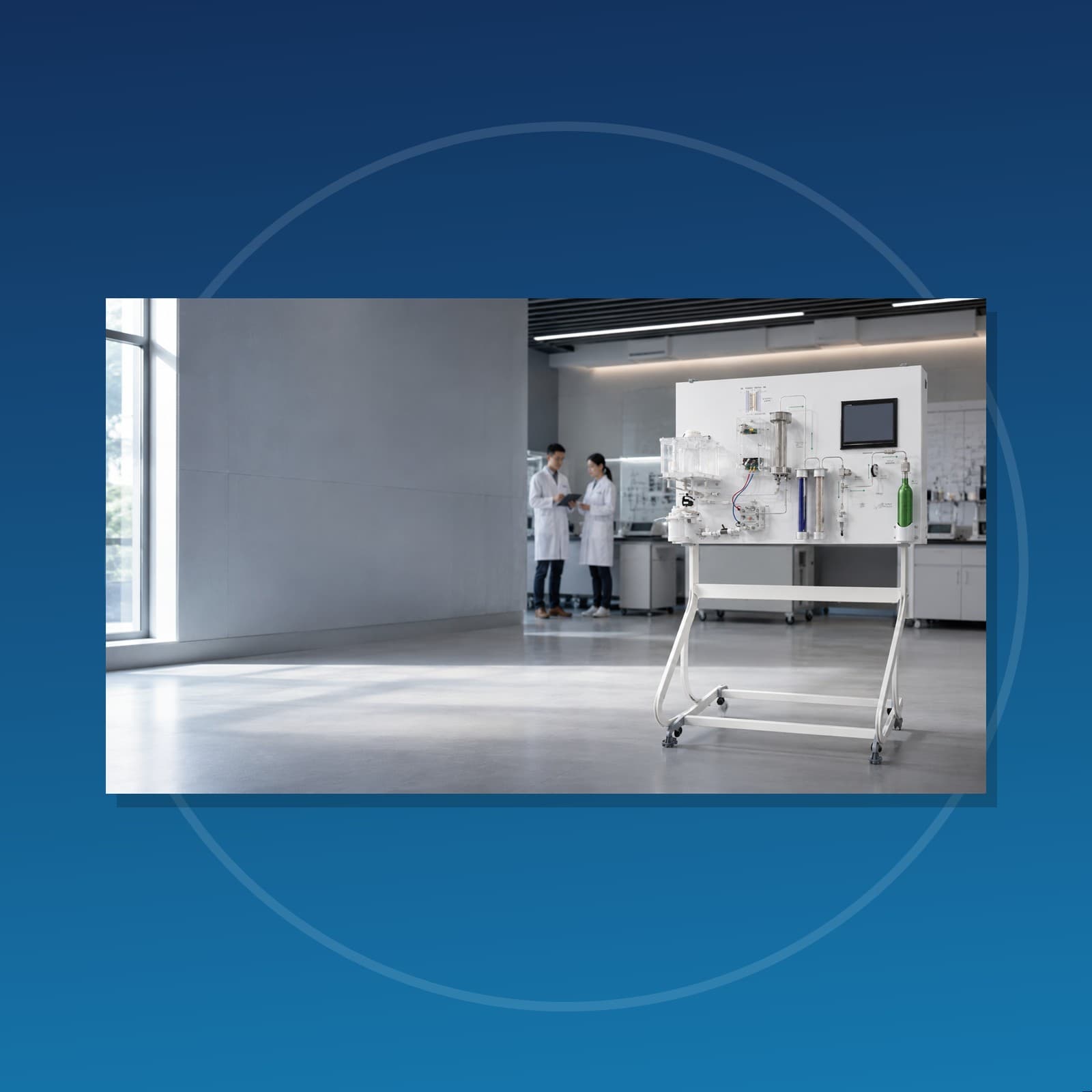
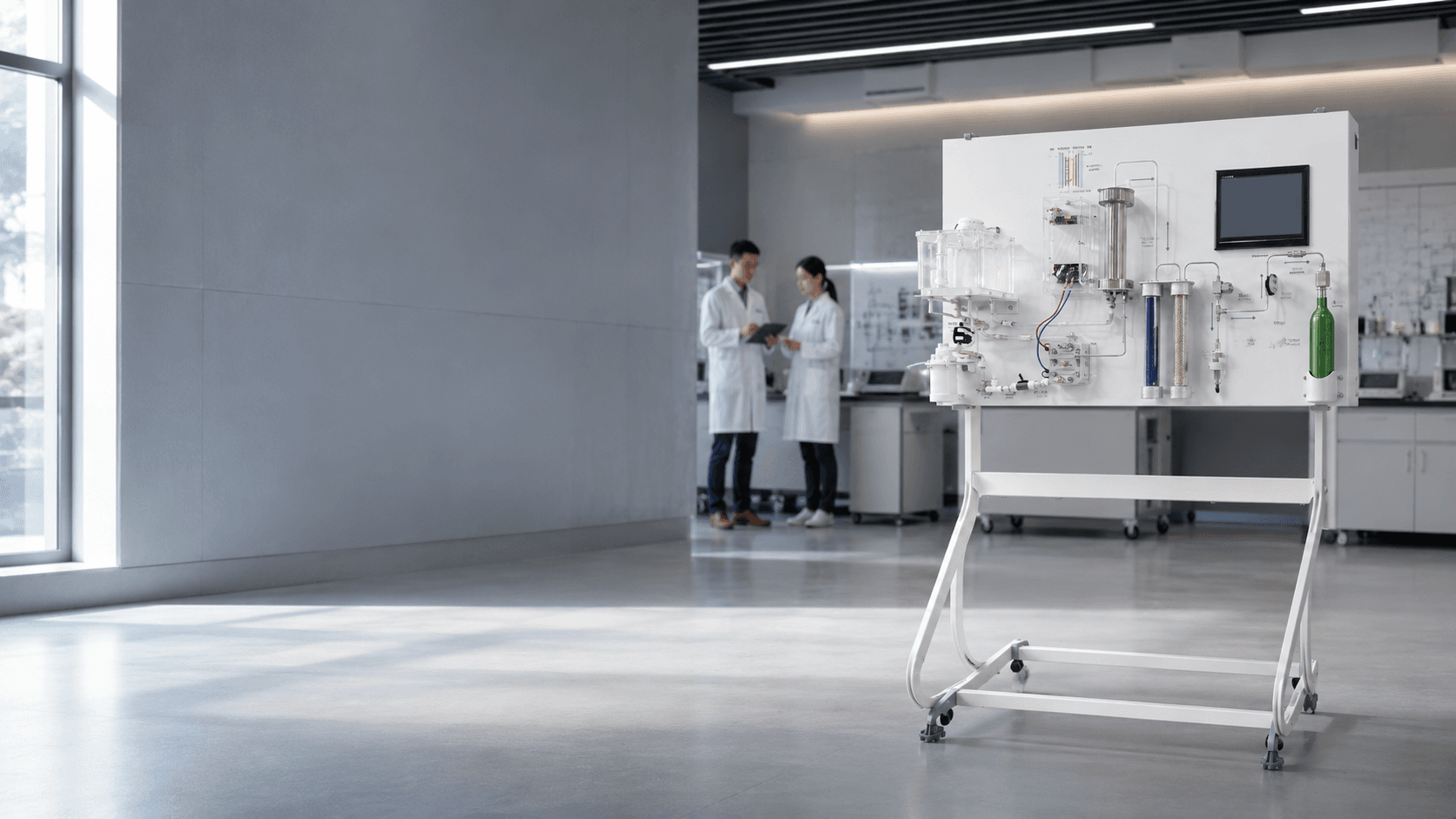
Vemdra lists the VDHT002 as a PEM Water Electrolysis Hydrogen Production and Storage Demonstration System. Its stated applications include new-energy teaching, hydrogen-energy experiments and scientific-research projects, with universities, research institutes and laboratories named as audiences. Those facts make it a sensible product reference for a buyer seeking a teaching-oriented PEM pathway. They do not, by themselves, decide whether it fits every course. The course outcome still wins.
Start the RFQ with one sentence: what must a learner be able to observe, measure or explain by the end of the session? A first-year class may need a clear conversion story. An advanced laboratory may need stronger measurement discipline and a narrower, more detailed experiment. A good manufacturer will use that sentence to shape the response instead of simply sending a generic price list.
Which operating parameters should a buyer compare?
Compare parameters as one system boundary, not as isolated headline numbers. The current VDHT002 product record lists a PEM electrolyzer with hydrogen production at 500 mL/min, oxygen production at 250 mL/min, a 9 V power supply voltage and a 10 A power supply current. These are product-record reference values for the listed model. The buyer should request confirmation for the final ordered configuration, because the quotation and data sheet are the correct sources for the delivered unit.
Storage deserves a separate line in the comparison. The VDHT002 record lists a solid-state hydrogen storage tank with a 60 mm cylinder diameter, 258 mm cylinder height, 1.5 kg weight and storage capacity above 22 g. It also lists hydrogen filling pressure and continuous discharge pressure at 0.6–1.0 MPa, with a hydrogen discharge-rate reference above 4 L/min. A supplier should explain what is supplied, what the host laboratory must provide and how the operating boundary is documented. Storage is not an accessory. It changes the procedure, the site review and the teaching story.
Physical fit matters as well. The demonstration system is listed at 1200 × 700 × 311 mm excluding the bracket, with a listed weight of 18 kg excluding it and 28 kg including it. Confirm room access, bench or floor layout, transport route and the number of learners who will work around the unit. A platform can be technically suitable and still become awkward if its place in the laboratory has not been considered.
A clear manufacturer response should distinguish stated specifications from assumptions. Ask which values are fixed, which are configuration-dependent, which user interfaces are visible during the experiment and which items require local confirmation. This sounds like basic procurement—and it is—but it prevents two offers from looking equivalent when their operating boundaries are not.
How do you tell a teaching platform from a research test platform?
A teaching platform is built around an understandable sequence. Its job is to help learners connect the core stages of a hydrogen system without getting lost in a maze of controls. A research test platform, by contrast, is designed to control, vary and record conditions so that a laboratory can study performance or durability. Both are useful. They are just not interchangeable, and trying to use one as the other is a fast route to disappointment.
The Vemdra VDHT002 sits on the teaching-system side of that line: it presents hydrogen production and storage as a visible learning pathway. When a programme needs controlled IV scans, long-duration stability work, detailed data capture or higher operating ranges, the buyer should also review dedicated PEM electrolyzer test equipment. Choosing the correct boundary early keeps the supplier response focused and protects the course from being over-specified or under-equipped.
There is a useful question to ask during every supplier call: what can a student do, see and record without improvised equipment? If the answer relies on several add-ons, vague future options or equipment that is not included in the quotation, flag it. The system may still be a fit, but the scope must be made explicit. Nobody wants a nice-looking platform that requires a scavenger hunt before the first practical class.
For a hydrogen energy education system, experiment depth should follow the curriculum. Introductory modules may value clear process visibility, safe supervision and repeatable startup. Advanced modules may value adjustable conditions, instrument access and data export. Tell the manufacturer which group you are teaching; it changes the right recommendation more than most buyers expect.
What evidence should a credible manufacturer provide?
Ask for evidence connected to the specific model and destination, not a folder of unrelated claims. A useful document request normally includes the product data sheet, operating manual, training or experiment material, maintenance guidance, packing list, serial-number information where applicable and the agreed inspection record. If your procurement process needs declarations, certificates or test reports, identify the exact document, destination market and ordered configuration. Precision is the whole point.
The factory-check plan deserves the same care. Define what the manufacturer will verify before shipment: agreed configuration, visible modules, basic operating sequence, accessories, labels, document pack and packing condition. If you want a remote demonstration or witness check, write that into the RFQ. A general promise that ‘testing is available’ does not say what will be tested or whether the buyer will receive the evidence.
The product data used in this article states applications and parameters for VDHT002, but it does not list a model-specific certification or test-report file. This article therefore does not claim one. A responsible manufacturer should be comfortable discussing what evidence can be supplied, what applies to the configuration and what must be reviewed locally by the host institution. A clear limitation is more valuable than a sweeping claim.
Evidence also appears in how questions are answered. Does the manufacturer distinguish installed-site responsibilities from equipment supply? Can they explain the hydrogen boundary and document package in plain English? Do they state what is included and what the buyer must arrange? These details often predict whether the project will stay calm after the crate arrives.
Need a configuration direction for your application?
Share your required flow, purity, pressure, operating profile and destination. Our team will help identify the questions your specification should answer.
Which purchasing risks should a laboratory avoid?
The first risk is treating all hydrogen trainers as the same. One system may focus on a visible demonstration, while another is intended for detailed testing. Compare the experiment list, accessible components, measurement points, required utilities, learner tasks and safety boundary. A single product category cannot answer those questions. The course design has to do the sorting.
The second risk is leaving the hydrogen and storage boundary vague. Ask about the system's stated production and storage parameters, filling and discharge conditions, connections, normal startup and shutdown, and responsibilities at the site. The supplier can explain their equipment; the university or laboratory still needs its own qualified review of operating procedures and applicable local requirements. That division of responsibility should never be left to implication.
The third risk is buying a document pack after the fact. Before approving the order, agree on manuals, experiment material, maintenance information, packing evidence, inspection scope and destination-specific documents. When this work is postponed, the course team may receive equipment before it receives the information needed to use it well. That is an avoidable headache.
The fourth risk is forgetting continuity. Educational equipment often changes hands between lecturers, lab managers and student cohorts. Ask how normal operation is taught, how technical questions are handled, which routine checks are recommended and how spares are approached. The unglamorous details are what keep a system useful for more than one semester.
What should a complete manufacturer-comparison RFQ include?
Begin with the buyer context: institution type, country, learner level, course or project title, number of groups, planned experiment and target delivery date. Add a simple room photo or layout if space is limited. This gives the manufacturer a real application to review rather than a blank request for ‘a hydrogen trainer.’ It also makes comparable quotations much easier to obtain.
Then describe the required pathway: PEM water electrolysis, hydrogen production, storage, fuel-cell use or another agreed demonstration step. List the parameters or observations the course needs, the expected utilities, space, supervision model, desired manual language, training expectation and any data or display requirement. State whether the unit will support a short demonstration, a recurring practical or a research-adjacent exercise.
Finish with the commercial and acceptance boundary. Request the final data sheet, bill of materials, document pack, pre-shipment check scope, packing record, service contact, shipping terms, payment terms and any evidence required by your destination. Link the inquiry to the VDHT002 PEM water electrolysis hydrogen production and storage demonstration system so the supplier and buyer use the same product reference. You can also direct the team to the broader hydrogen education equipment range when a different experiment depth may fit better.
Vemdra can review the brief around the lesson, site and planned hydrogen pathway. A detailed RFQ does not make procurement slower. Usually, it does the opposite: it turns a string of guesswork emails into a technical discussion that both sides can follow.
Frequently asked questions
What is a PEM hydrogen training system?
A PEM hydrogen training system is educational equipment that helps learners understand water electrolysis and the linked hydrogen pathway through visible modules, defined operating conditions and structured experiments. The exact scope depends on the selected configuration.
What should I compare when choosing a PEM hydrogen training system manufacturer?
Compare the supported experiment sequence, final configuration, operating parameters, hydrogen and storage boundary, site requirements, documentation, factory-check scope, training and after-sales support.
What parameters does the Vemdra VDHT002 teaching system list?
The current VDHT002 product record lists 500 mL/min hydrogen production, 250 mL/min oxygen production, a 9 V and 10 A power supply, and a solid-state storage tank with stated capacity above 22 g. Confirm the final ordered configuration with Vemdra before purchase.
Does a PEM hydrogen training system replace an electrolyzer test rig?
No. A teaching system helps students understand a defined hydrogen pathway. A dedicated test rig is appropriate when the laboratory needs controlled operating conditions, detailed measurement or repeatable performance and stability data.
Which documents should accompany a hydrogen energy education system order?
Request the product data sheet, manuals, experiment or training material, maintenance guidance, packing list, agreed inspection record, service information and any configuration-specific evidence needed for the destination.
How this guide was prepared
Vemdra's editorial team uses application discussions, project-planning experience and publicly available technical references to frame these guides. Technology claims and site requirements should always be checked against current equipment documentation and local standards before a purchase or installation decision.
For background reading, consult the U.S. Department of Energy overview of hydrogen production by electrolysis and applicable local regulations.