
RFQ fields for photovoltaic hydrogen teaching equipment — confirm the final ordered configuration in the supplier data sheet.
| RFQ field | Why the buyer should define it |
|---|---|
| Learning outcome and learner level | Separates a short visual demonstration from a repeatable laboratory exercise with measurements and assessment. |
| PV, electrolysis and fuel-cell sequence | Confirms that the system shows the intended renewable-electricity, hydrogen-production, storage and electrical-load pathway. |
| Electrical and gas-side parameters | Lets the supplier confirm the required input, output, production rate and safe operating limits for the selected configuration. |
| Visible measurements and data | Prevents a display-only unit from being mistaken for equipment that supports the required observations or records. |
| Safety and site boundary | Clarifies supervision, classroom or laboratory location, ventilation review, utilities, startup and shutdown responsibilities. |
| Document and acceptance package | Makes manuals, wiring or process information where relevant, packing details, inspection scope and destination needs visible before shipment. |
What should a hydrogen education equipment RFQ say first?
Start with a plain conclusion: a hydrogen teaching equipment RFQ is ready to send when it states what learners must observe or demonstrate, where the unit will operate and which technical facts the supplier must confirm. For a university laboratory, a technical school or a science centre, that first paragraph is more valuable than a long list of vague features. It tells the supplier whether the buyer needs a visible energy story, a hands-on experiment, or a platform that supports structured measurement.
The core procurement question is simple: can the proposed equipment support the planned lesson safely and repeatedly? A quote cannot answer that question from the phrase ‘hydrogen trainer’ alone. Two units may both contain a small solar panel and a fuel cell, yet one may be suited to a brief display while another supports a sequence that students can follow, discuss and record. The lesson objective has to lead the specification.
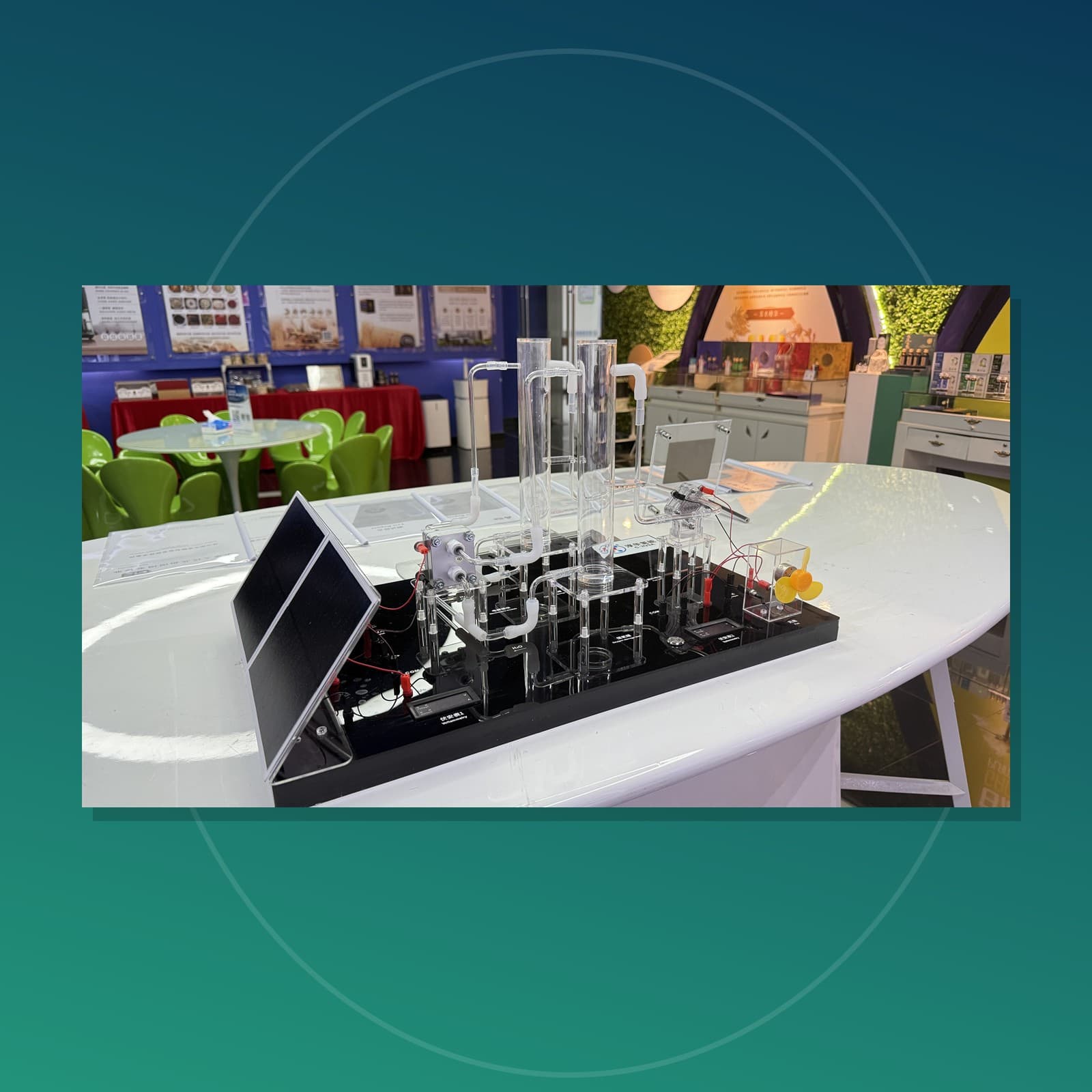
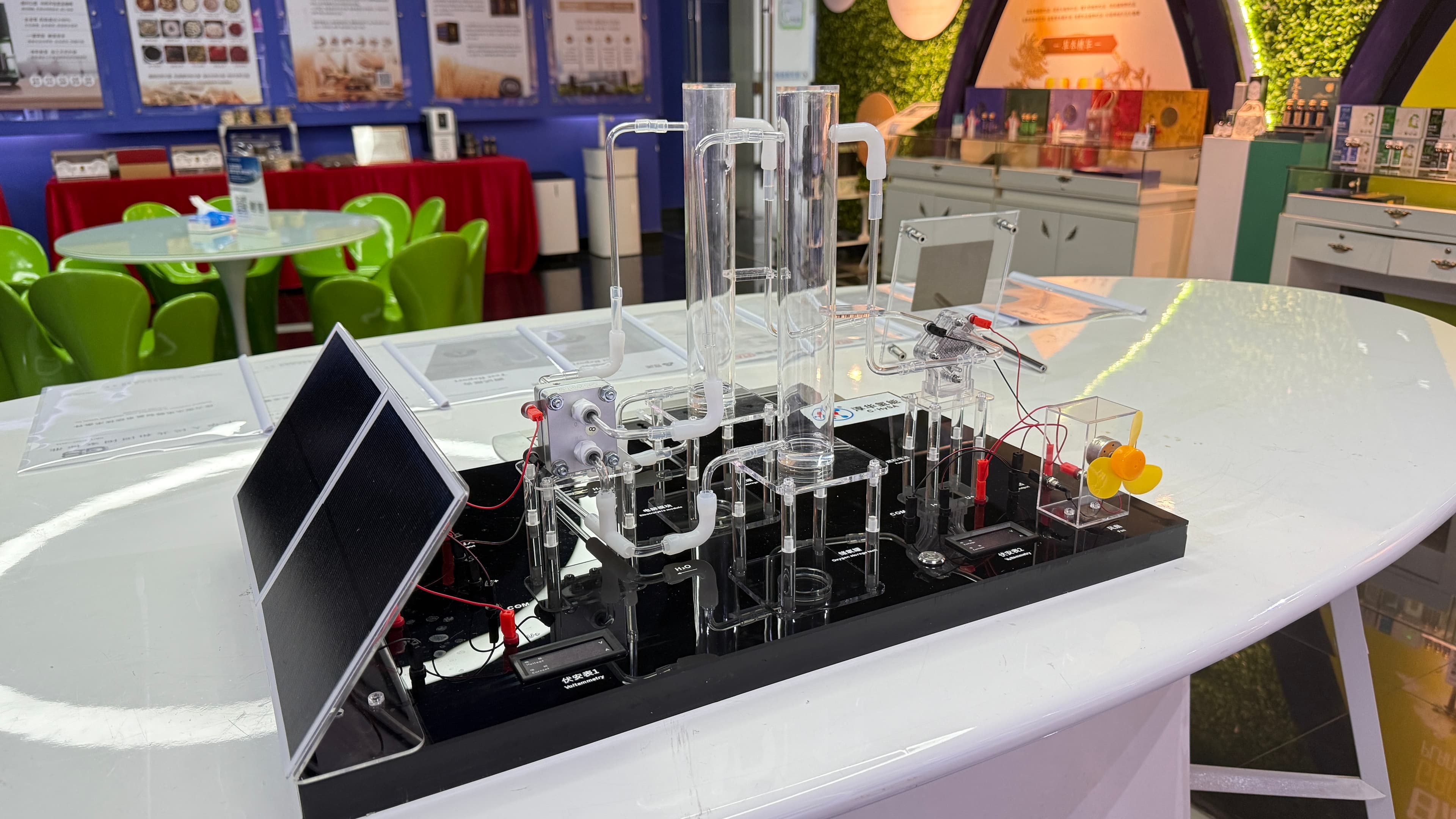
For a photovoltaic hydrogen teaching unit, describe the intended chain: photovoltaic input, PEM water electrolysis, hydrogen handling or storage where supplied, fuel-cell conversion and a visible load. Vemdra lists the VDHT003 as a Photovoltaic Hydrogen Production Demonstration Teaching Unit for new-energy teaching experiments, science education and hydrogen-energy principle demonstration. Its listed audiences include schools, universities, science museums and science-education institutions. That is useful context, but the final suitability still depends on the course and site.
Do not begin with a price target. Begin with the teaching task. Once the task is clear, suppliers can respond to the same technical brief, and the buyer can compare more than a headline price. It is a small change in order, but it saves a lot of back-and-forth later.
Which parameters must be confirmed before a supplier quotes?
Put the technical boundary in writing. For the VDHT003 product record, the photovoltaic panel is listed at 12 W total power, 5 V rated voltage and 2.4 A rated current. The PEM electrolyzer is listed at 6 V and 1 A, with a stated hydrogen-production rate below 1 mL/min. The fuel-cell section lists 3 V, 0.94 A and 0.019 W. These are configuration reference values, not substitute values for a final quotation or local safety review. Ask the supplier to confirm the exact ordered model and documentation.
Why list such small numbers? Because they tell the buyer what kind of educational experience is being purchased. A low-volume, visible demonstration has a different classroom role from an industrial gas system or a research test platform. It may be ideal for explaining conversion stages and measurement basics. It may not be the right choice for a programme that needs high-flow experimentation, extended characterization or a large group operating several stations at once. The RFQ should say which outcome matters.
Also include physical handling. The VDHT003 product record lists dimensions of 50 × 420 × 330 mm and a weight of 6.2 kg. Confirm the final dimensions, shipping arrangement, classroom table space, storage location and who will set up the unit. It sounds almost too practical, but a unit that cannot move easily between lessons can lose a surprising amount of value.
A sound parameter list normally covers the input source, electrical ranges, hydrogen-production path, fuel-cell or load output, visible sensors, data needs, physical size and required accessories. If an item is not known yet, mark it as ‘to be confirmed’. A visible unknown is manageable. An unasked question is where trouble likes to hide.
How do you tell whether a teaching system supports the intended experiment?
Ask for the experiment flow, not only a product photograph. A strong response can show what the learner does first, what changes next and which effect becomes visible. In a solar hydrogen exercise, students may connect renewable electricity to electrolysis, observe gas generation, discuss the energy carrier and then see fuel-cell output at the load. That sequence gives the lesson a beginning, middle and end. Without it, even handsome equipment can become a piece of scenery.
Then ask what can be measured. A demonstration does not need a research-grade data system to be useful, but the buyer should know whether voltage, current, elapsed time, gas-related observation or load response can be seen and recorded. Match the answer to the syllabus. A middle-school audience may need a clear physical story; an engineering class may need operating values that support calculations and discussion. Same topic, different depth.
This is where the product category matters. The VDHT003 is presented as a photovoltaic hydrogen-production demonstration teaching unit, while Vemdra also lists dedicated PEM electrolyzer test equipment for laboratory testing. A buyer should not force one unit to act like the other. A teaching demonstrator should make the conversion chain clear; a test rig should control and record the test boundary. Both can be valuable, just for different jobs.
Ask the supplier to map each requested learning outcome to a visible module, measurement or experiment step. If the answer is unclear, the quote needs more work. That one request reveals a great deal about whether the supplier understands education equipment as a complete learning tool rather than a set of components.
What supplier evidence should a university request?
Request documents that belong to the actual unit and destination. At a minimum, ask for a product data sheet, operating manual, experiment or training material, packing list, serial-number identification where applicable, maintenance guidance and the agreed inspection record. If a purchasing team needs declarations, certificates or test reports, name the exact document, market and configuration in the RFQ. A broad statement that a supplier ‘has certification’ is not enough evidence for a specific exported unit.
It is sensible to ask for the factory-check scope too. For a photovoltaic hydrogen teaching system, the buyer might ask the supplier to confirm the agreed configuration, visible module sequence, basic function check, accessories, labelling and document pack before shipment. If a remote demonstration or witness check is needed, say so early. The useful question is not ‘do you test it?’ but ‘what will be checked, recorded and supplied with this order?’
Do not invent a compliance claim in the brief. Vemdra's product record provides the parameters and intended applications cited here, but it does not identify a model-specific certificate file for VDHT003. This article therefore makes no claim about one. The purchasing team should confirm applicable destination requirements and request evidence before approving the order. Straight answers are more helpful than decorative promises.
Supplier credibility also appears in the small details: whether the bill of materials is clear, whether the cable and accessory list matches the photo, whether support contacts and training scope are stated, and whether questions receive a precise response. For educational equipment, those details are part of the learning experience after delivery, not mere paperwork.
Need a configuration direction for your application?
Share your required flow, purity, pressure, operating profile and destination. Our team will help identify the questions your specification should answer.
Which procurement risks are easiest to avoid?
The first risk is buying a category instead of an outcome. A buyer sees ‘solar hydrogen kit’ and assumes it will support an entire renewable-energy course. Perhaps it will. Perhaps it is intended for a focused visual demonstration. Avoid the mismatch by listing the planned experiment, learner group, lesson duration and required data before asking for price. It is the cleanest way to compare offers fairly.
The second risk is a missing site boundary. Even a small teaching unit needs an agreed location, trained supervision, an operating procedure and a review of relevant site conditions. The equipment supplier can explain the product. The host institution still needs to decide who operates it, how learners interact with it and what local rules apply. That split of responsibility should be written down; it helps everyone sleep better.
The third risk is a thin document pack. If the next lecturer cannot find the manual, understand normal startup and shutdown, identify parts or contact support, a platform may only be used once. Request the document package before purchase approval, then check it against the delivered equipment. This is particularly important when a teaching lab changes staff between semesters.
The fourth risk is assuming that every teaching product needs the same depth. More components can make an energy pathway more complete, but they can also make a first lesson harder to run. There is a mild contradiction here: a more detailed unit is not automatically a better teaching unit. The right level is the one that lets the learner see, handle and explain the intended system without losing the plot.
What should the final RFQ checklist include?
Use a short, structured checklist. State the institution type, country, learner level, module title, expected group size and target lesson or project. Define whether the platform is for a school display, university practical class, science-centre demonstration or research-adjacent teaching. Then list the physical space, available utilities, target delivery date and the person responsible for technical questions. This lets the supplier respond to the application rather than guessing.
Describe the requested teaching sequence: PV input, electrolysis, hydrogen handling or storage, fuel-cell output and load. Add the required parameters or observations, preferred display or data needs, included accessories, manual language, installation expectation, training need and maintenance or spare-parts expectation. If a relevant requirement is still open, write it down as an open item. That is normal procurement, not a failure of planning.
Finish with acceptance and commercial details: requested pre-shipment check, packing evidence, document list, shipping terms, payment terms and any destination-specific documents to be confirmed. Link the RFQ to the relevant VDHT003 photovoltaic hydrogen production teaching unit page so the supplier and buyer share the same product reference. For a broader view of available systems, include the hydrogen education equipment range as well.
Vemdra can review a teaching brief around the specific course, space and intended experiment. Send the checklist with a simple room photo or layout if the setup space is limited. It is often the fastest way to turn a general inquiry into a practical, comparable proposal.
Frequently asked questions
What is hydrogen teaching equipment?
Hydrogen teaching equipment is a purpose-built learning platform that helps students observe parts of the hydrogen energy chain, such as photovoltaic input, water electrolysis, hydrogen handling, fuel-cell power generation, measurement and operating procedures. The final experiment scope depends on the selected model.
What should a university include in a hydrogen education equipment RFQ?
Include the course outcome, learner level, planned experiment sequence, electrical and gas-side requirements, measurement needs, site constraints, requested documents, factory-check scope, destination and target delivery date.
What does the Vemdra VDHT003 photovoltaic hydrogen teaching unit list?
The current VDHT003 product record lists a 12 W photovoltaic panel, a PEM electrolyzer rated at 6 V and 1 A, a stated hydrogen-production rate below 1 mL/min, and a fuel cell rated at 3 V, 0.94 A and 0.019 W. Confirm the final ordered configuration with Vemdra.
How do I compare solar hydrogen education kit suppliers?
Compare the supported learning outcomes, visible experiment sequence, measured parameters, operating boundary, document pack, inspection scope, training, service process and the supplier's ability to answer configuration-specific questions.
Do hydrogen education equipment orders need certificates or test reports?
The required evidence depends on the destination, institution and selected configuration. Identify the exact documents needed in the RFQ, and request configuration-specific evidence before purchase approval rather than relying on a general claim.
How this guide was prepared
Vemdra's editorial team uses application discussions, project-planning experience and publicly available technical references to frame these guides. Technology claims and site requirements should always be checked against current equipment documentation and local standards before a purchase or installation decision.
For background reading, consult the U.S. Department of Energy overview of hydrogen production by electrolysis and applicable local regulations.